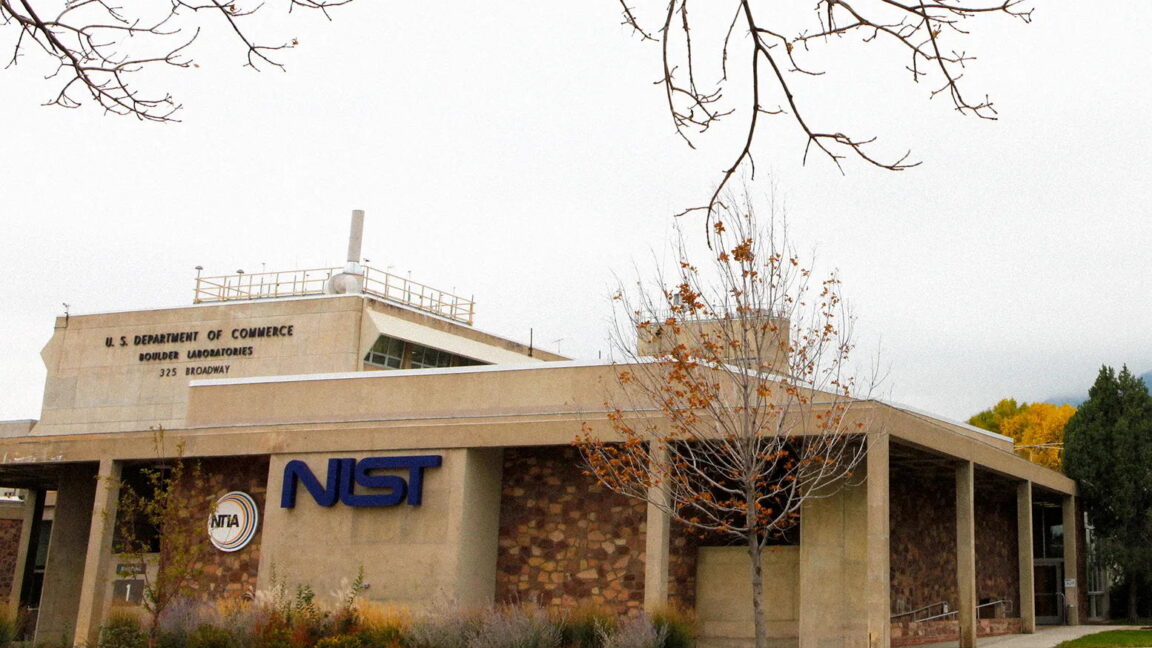
NIST Revokes Foreign Scientist After-Hours Lab Access, Tightens Facility Restrictions
If this reflects deliberate workforce policy rather than a security incident, it reduces NIST's ability to set international standards in semiconductors, quantum, and advanced manufacturing — areas where standards adoption directly influences export control enforcement and allied industrial policy.
Foreign researcher exclusion slows NIST's research output, which in turn delays U.S. standard-setting timelines, allowing competitors (China, EU) to propose alternative standards that allied procurement offices then must accommodate, fragmenting supply chains that defense contractors rely on.
This action directly constrains NIST's ability to recruit and retain foreign talent in standards development, metrology, and materials science — areas where U.S. competitiveness depends on attracting top researchers.
Foreign scientists have historically composed a significant portion of NIST's research staff, particularly in quantum, advanced manufacturing, and semiconductor standards work.
If this signals a sustained policy shift rather than an isolated incident, it will force U.S. standards bodies to rely on a smaller talent pool and may slow adoption of NIST standards internationally, weakening U.S. soft power in technical governance.
Contractors dependent on NIST validation (semiconductor, aerospace, advanced manufacturing firms) may experience delays in certification cycles if research productivity declines. The decision-relevant question is whether this reflects executive branch policy or a one-off security incident — the article does not clarify.
Did NIST issue a formal policy change, or was this a security-driven decision affecting one lab? How many foreign nationals lost access? Which research programs are affected? Has NIST or the White House issued guidance on whether this applies government-wide?
Fault Lines
Strategic intelligence, synthesized daily — with a public track record. Every call graded against what actually happened.