Putin Agrees to European Seat at Next Ukraine Talks; Zelenskyy Reports Starshield Disruptions
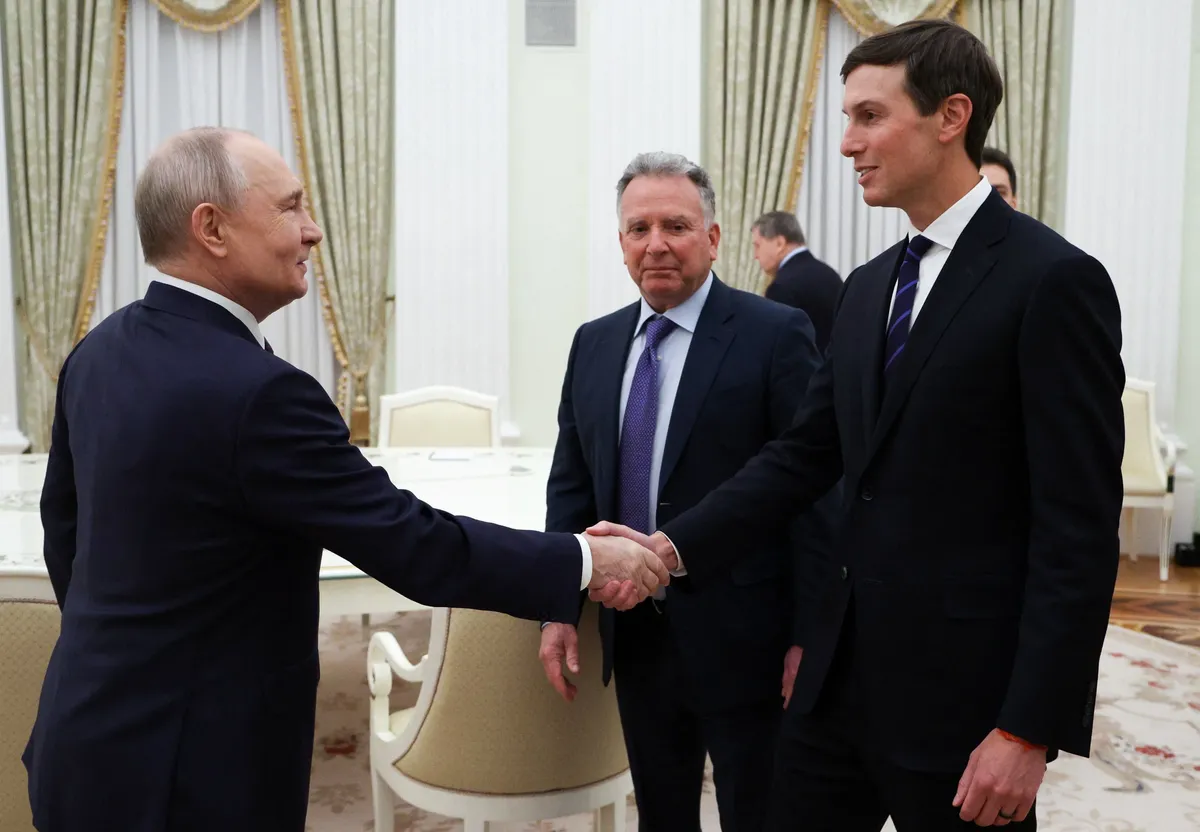
Putin's agreement to include European representatives in the next round of talks, announced by Witkoff on November 13 after Kremlin meetings, is conditioned on a prior Washington clarification: do European capitals want peace or war? That condition is not procedural — it is a veto dressed as a question.
Putin is requiring the US to deliver European alignment before Europeans get a seat, which means Washington must either pressure its allies into a posture Moscow finds acceptable or watch the invitation expire.
The Abu Dhabi talks earlier this week, the first direct US-mediated Russia-Ukraine negotiations in nine months, produced acknowledged progress on secondary issues but no movement on territory — Russia holds approximately one-fifth of Ukraine, and Kyiv refuses to cede the remaining Donbas. Any European participation that follows will therefore open at the hardest point on the agenda.
Zelenskyy's Starshield disruption report, made public the same day Witkoff was announcing the European invitation, creates a second pressure channel that the sources do not fully resolve.
The sourcing does not establish whether the speed restrictions on Starshield — which Zelenskyy says left Ukrainian interceptors unable to reach sufficient velocity to down Russian jet-powered drones across the entire front line — originated from a US government directive to SpaceX or from SpaceX's own enforcement over Russian-controlled territory.
The timing, coinciding with the Abu Dhabi talks, is the critical unknown. If Washington directed the throttling, Kyiv is being shown, before any deal is signed, that its battlefield communications are a variable the US controls.
European capitals drawing up reassurance-force proposals — the French and British concepts Putin explicitly warned would restart the conflict — should read that demonstration as relevant to their own planning assumptions about US reliability as a security guarantor.
Zelenskyy is scheduled to meet Witkoff and Kushner in Dublin, and that meeting is now the forcing event. He must decide whether to press the Starshield question publicly, which risks the US relationship, or absorb the disruption and negotiate from a weakened battlefield position.
His public statement that he finds US discussions of a new European security order with Russia 'a bit strange' is a signal of discomfort, not a break — but the Dublin meeting will show whether he has leverage to demand answers or is expected to accept conditions already set in Abu Dhabi and Moscow.
Putin's conditional acceptance of European participation hands Washington an enforcement role it may not want: the US must now either deliver European compliance with Moscow's framing or watch the invitation collapse before the next meeting.
Zelenskyy's simultaneous disclosure of Starshield disruptions affecting the entire front line — with no public explanation from SpaceX or the US government about the source of the restrictions — means Kyiv is experiencing a degradation of battlefield capability at the precise moment it is being asked to negotiate territorial concessions.
European governments developing post-deal reassurance-force concepts, particularly those from France and Britain, face a direct Russian warning that any such presence would restart the conflict, and they now must weigh that warning against the fact that their seat at the table is itself conditional on Washington's prior approval.
The Dublin meeting between Zelenskyy, Witkoff, and Kushner is the next dated event: whether Kyiv receives any explanation for the Starshield restrictions in that session will indicate whether the disruption is a technical matter or a policy instrument.
Watch for whether European governments respond to Putin's peace-or-war framing publicly before the next round of talks is scheduled — silence would itself be an answer Moscow can use.
Did the Starshield speed restrictions originate from a US government directive to SpaceX, or from SpaceX's own terms-of-service enforcement over Russian-controlled territory — and was the timing coordinated with the Abu Dhabi talks?
Fault Lines
Strategic intelligence, synthesized daily — with a public track record. Every call graded against what actually happened.