Ukraine Supplies Interceptor Drones to US, Gulf States as Shahed Countermeasure Amid Iran Conflict
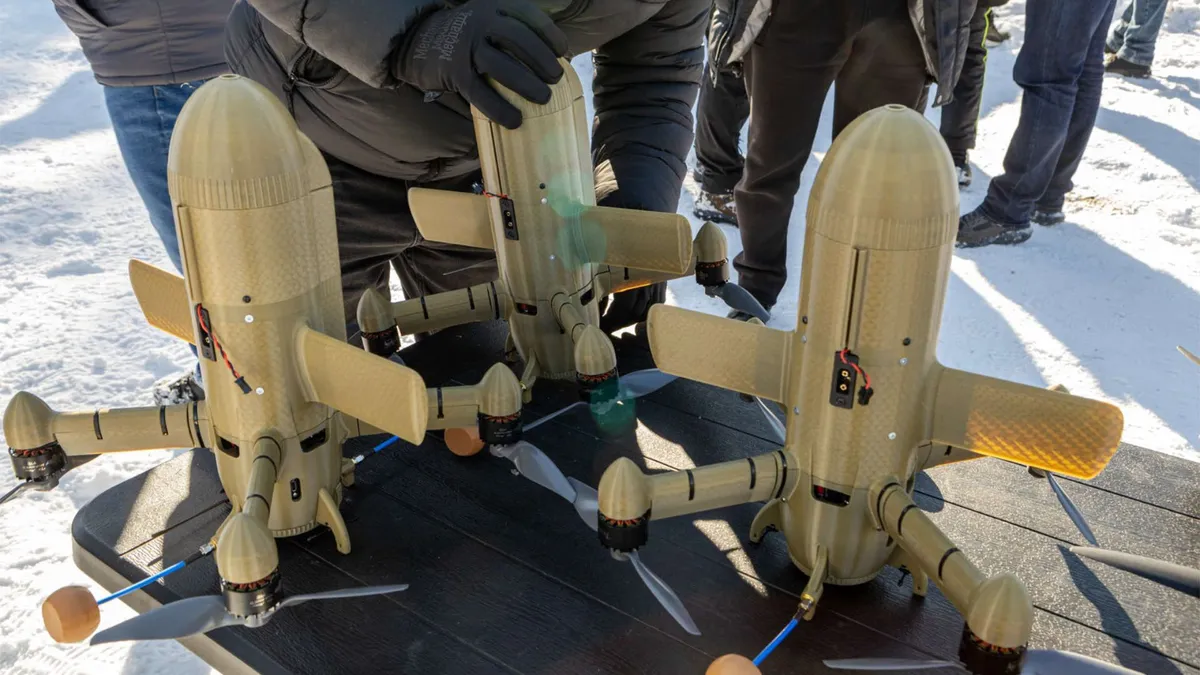
Ukrainian interceptor deployment to the Gulf creates a procurement multiplier effect: allied air defense budgets must now fund two theaters simultaneously (Europe + Middle East) from the same supplier base, forcing choices between sustaining Ukraine's air defense and equipping Gulf allies against Iranian threats.
This directly compresses Raytheon and Lockheed Martin's margin on Patriot and THAAD sustainment contracts in the region, as Gulf procurement officers now benchmark against a $1,000 alternative rather than $100K+ traditional interceptors — potentially forcing legacy air defense primes to either license Ukrainian designs or concede market share to new entrants.
This signals a direct operational linkage between the Ukraine and Iran conflicts — Ukrainian air defense solutions developed against Russian drone attacks are now being operationalized in real-time against Iranian systems in the Gulf.
For defense procurement, this creates a two-front validation problem: interceptor demand is now driven by simultaneous conflicts in Europe and the Middle East, compressing supply chains and forcing allied procurement offices to compete for the same Ukrainian production capacity.
The $1,000 unit cost claim, if accurate, would undercut traditional air defense solutions by an order of magnitude, but the article provides no production volume, delivery timeline, or technical specifications — critical gaps before program managers can assess whether this is a supplement or substitute for existing air defense contracts (Raytheon Patriot, THAAD, Avenger systems).
Watch whether this creates pressure to license Ukrainian designs to US or Gulf manufacturers, or whether supply constraints force allies to choose between Ukraine support and Middle East air defense.
The article does not specify production volume, delivery timelines, technical specifications (range, accuracy, intercept probability), which Gulf states are receiving them, or whether these are being integrated into existing air defense networks or deployed as standalone systems.
Fault Lines
Strategic intelligence, synthesized daily — with a public track record. Every call graded against what actually happened.