DoD Shifts Combat Medic Workflows Away From Paper Triage as Large-Scale Operations Demand Real-Time Data
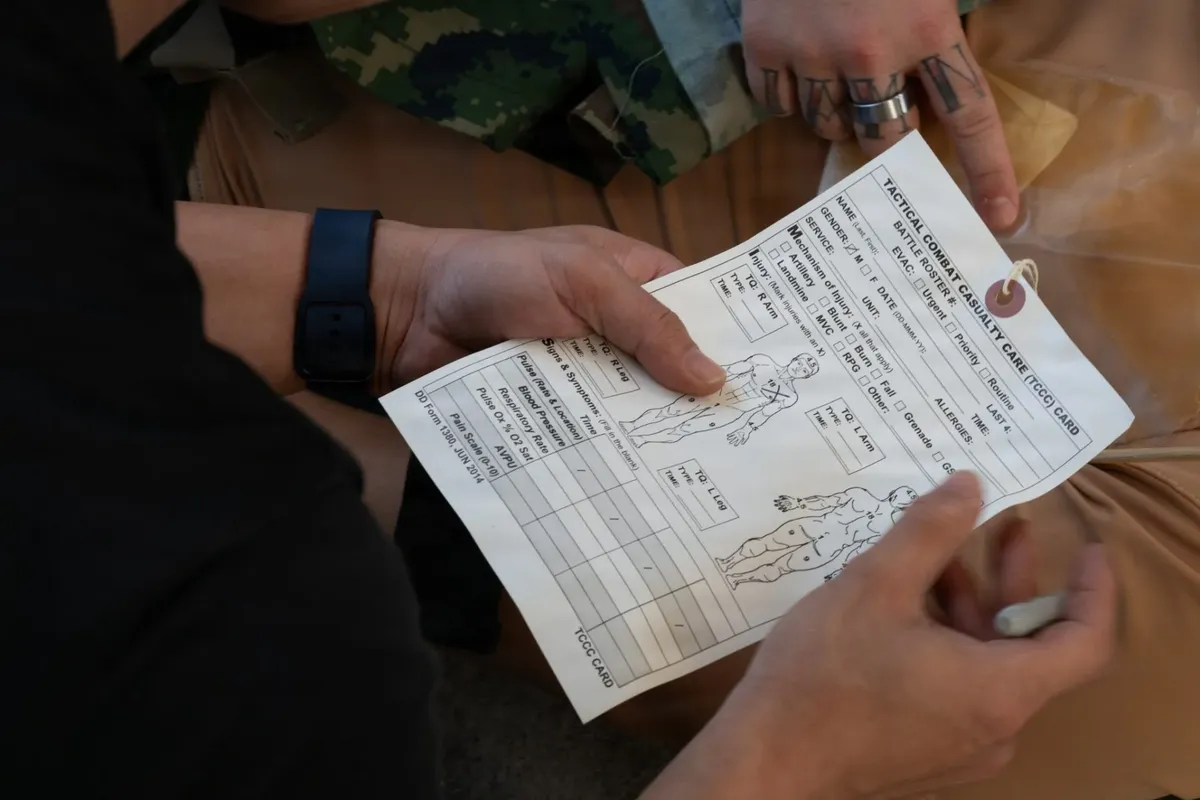
Digitized triage data at point-of-injury forces a redesign of medical supply chain visibility and casualty tracking across distributed, contested environments.
If triage information flows digitally rather than through paper records that arrive with the patient, medical logistics nodes can pre-position blood products, surgical supplies, and evacuation capacity based on real-time casualty patterns rather than post-hoc manifest data.
This creates a second-order requirement for secure, low-latency medical networks that can operate independently of tactical command networks—a new procurement category that intersects with both military medical IT and tactical edge computing vendors.
This signals recognition that force structure and casualty evacuation doctrine assumed in Iraq/Afghanistan—predictable rear-area hospitals and reliable air transport—do not scale to peer conflict.
Digitizing triage data (rather than paper records) enables distributed decision-making across fragmented medical networks and creates demand for mobile, ruggedized, interoperable medical IT systems. The constraint is not technology novelty but integration into field-deployed workflows under electronic warfare and comms degradation.
This forces medical IT vendors and integrators (Cerner's military health division, smaller tactical medical software firms) to design for offline-first operation and rapid data reconciliation, which is a different engineering problem than civilian EHR systems. The absence of named systems or timelines suggests the requirement is still being formalized—watch for JMEDAC or similar medical command procurement actions.
The article does not identify which medical IT systems the DoD is evaluating, whether this is a formal requirement or informal guidance, the timeline for fielding, or which commands are leading the transition.
Fault Lines
Strategic intelligence, synthesized daily — with a public track record. Every call graded against what actually happened.