Russia, North Korea Formalize Long-Term Military Pact; Deepens Anti-US Axis Amid Middle East Escalation
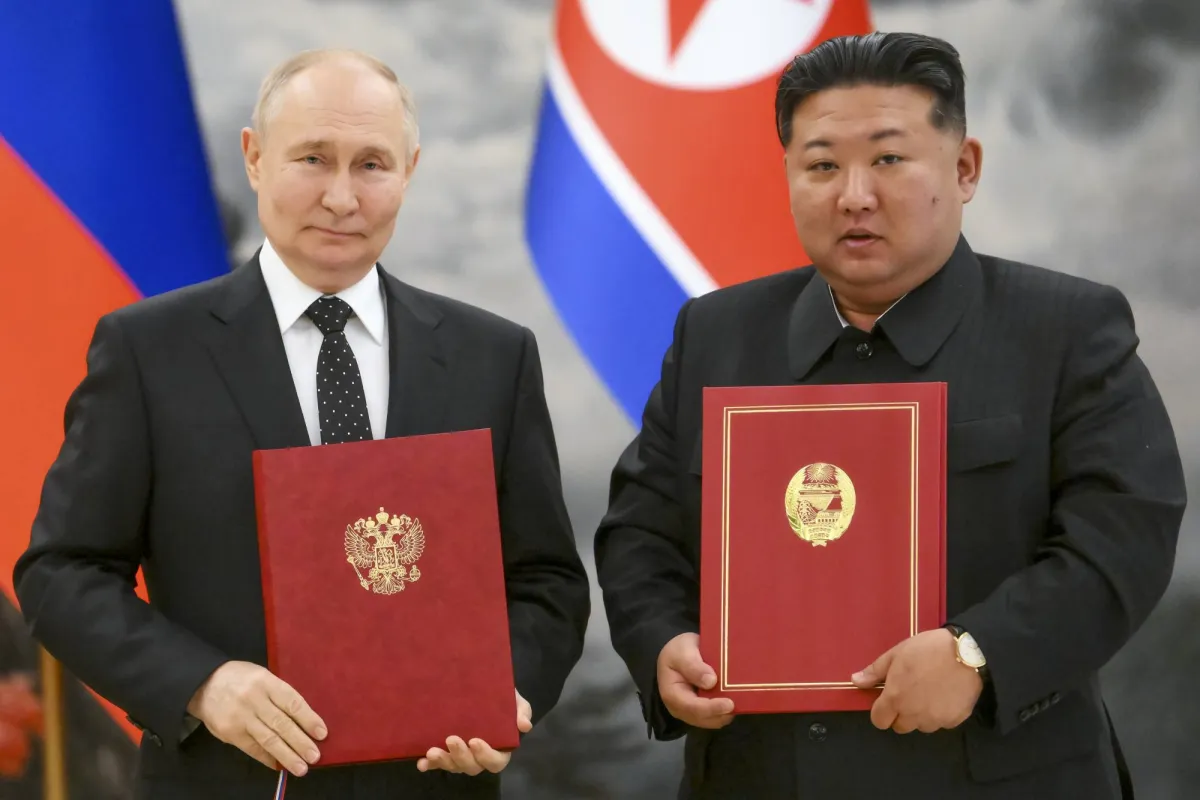
The pact accelerates allied procurement timelines in the Indo-Pacific and Europe. Japan's hypersonic missile fielding and EU Article 42(7) activation (both announced April 24) were hedges against U.S. reliability; this Russia-North Korea formalization validates those hedges and justifies faster spending. Simultaneously, the Russia-NK axis absorbs resources and attention from U.S.
Pacific Command planning, which is already stretched across three carrier strike groups in CENTCOM enforcing the Iran blockade. Procurement competition shifts: allies now compete for expedited delivery of air defense and anti-ship systems from non-U.S. sources (Thales, MBDA, Samsung) because they cannot assume sustained U.S. military presence in a crisis.
This cements the anti-US coalition at a critical juncture.
Russia gains access to North Korean manpower and industrial capacity for sustained operations in Ukraine; Pyongyang gets advanced weapons, technology transfer, and explicit security guarantees at a time when U.S. commitment to regional allies is fracturing (see Japan and EU hedging signals from the past 72 hours).
The timing matters: it arrives as the Trump administration is simultaneously prosecuting a blockade against Iran, ordering shoot-to-kill rules for Hormuz operations, and watching allied partners activate independent defense frameworks. Moscow reads this correctly — the U.S. is overextended and divided.
North Korea now has formal cover to accelerate weapons exports to Iran and non-state actors without fear of escalation. For defense primes, this locks in a multi-year supply competition for air defense systems and counter-drone capabilities across NATO and Indo-Pacific allies who no longer trust U.S. forward presence.
What are the specific military domains covered — missiles, cyber, naval, air defense? The headline says 'long-term cooperation' but doesn't specify whether this includes technology transfer for ICBM development, drone production, or joint training.
Fault Lines
Strategic intelligence, synthesized daily — with a public track record. Every call graded against what actually happened.