F-35 Delays Push Air Force to Double F-15EX Buy
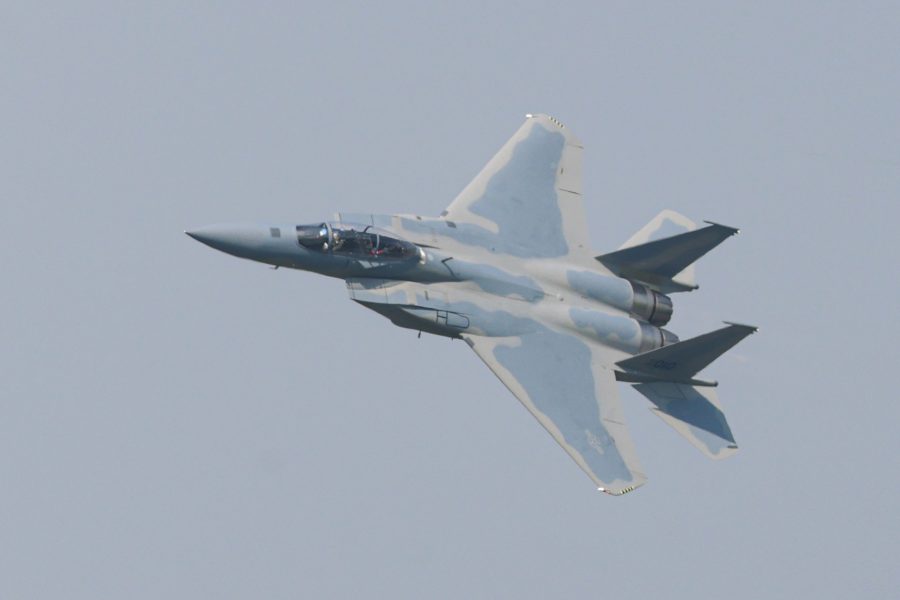
If the Air Force is doubling F-15EX production, Lockheed Martin's Fort Worth facility faces a capacity constraint. The F-15EX line currently produces roughly 24 aircraft per year (estimated from prior reporting); doubling that to 48+ per year requires either a second shift or parallel production of sub-assemblies.
The second-order effect: accelerated F-15EX production will compete with F-16 sustainment for Fort Worth floor space and skilled labor. This is a domestic industrial base constraint, not a design problem. Boeing's defense division will signal this in Q2 2026 earnings guidance — watch for language about 'tactical aircraft segment margin pressure' or 'workforce ramp timing.'
This is a procurement substitution, not a capability gap — the Air Force is consciously choosing a mature platform over waiting for F-35 upgrades.
The decision commits $X billion (article does not specify total F-15EX buy cost) to a fourth-gen airframe when the service is supposed to be transitioning to fifth-gen. The mechanism: F-35 Block 4 and Block 5 delays have pushed critical avionics and sensor upgrades past the operational readiness timelines INDOPACOM and ACC need.
Rather than accept a fighter fleet with degraded capability for 3-5 years, the Air Force is buying F-15EX as a near-term force multiplier that doesn't require those upgrades. Watch for the FY27 FYDP markup to see whether this F-15EX increase comes from the fighter line or forces a recut elsewhere in tactical aviation.
What is the total unit count of the expanded F-15EX buy, and what was the original planned quantity? The article says 'more than double' but doesn't provide baseline numbers. Also: did the Air Force reprogram existing F-35 procurement dollars, or does this represent new budget authority?
Fault Lines
Strategic intelligence, synthesized daily — with a public track record. Every call graded against what actually happened.