Fincantieri Secures First LSM Contract as US Navy Expands Amphibious Lift Amid Hormuz Blockade
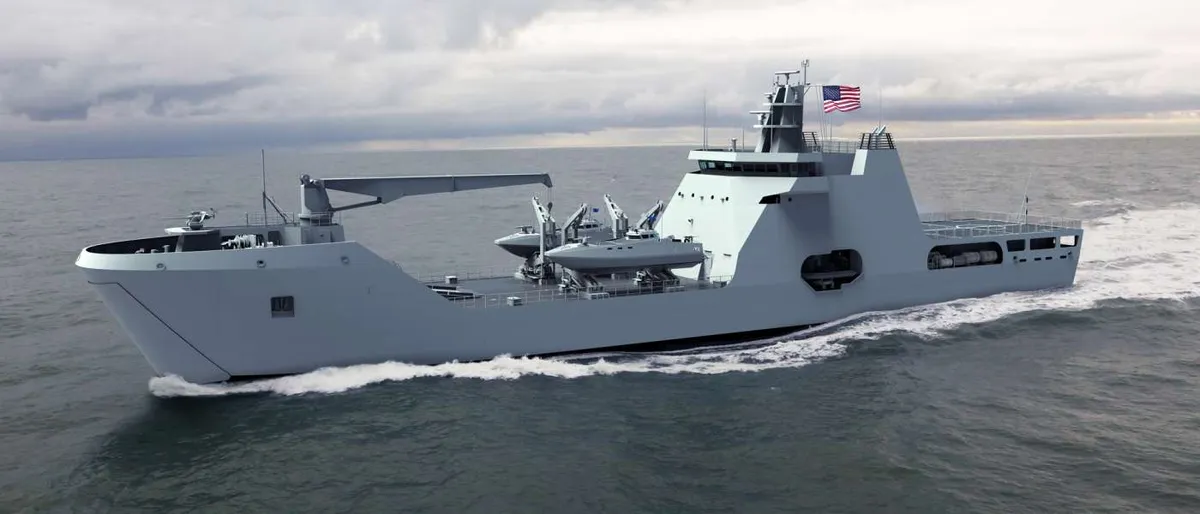
The LSM award locks in Fincantieri as the sole builder of U.S. amphibious ships at the moment when the Trump administration is redirecting defense spending toward active Middle East operations (43% defense budget increase announced April 15) and simultaneously expecting allies to co-fund their own independent defense capacity (Germany's NATO fallback announced April 15).
If LSM delivery slips beyond 2030, the Navy faces a gap in amphibious lift precisely when the Hormuz blockade model may replicate in other chokepoints (Taiwan Strait, South China Sea), forcing reliance on allied landing craft or commercial lease — a vulnerability that undermines the credibility of U.S. power projection in the Indo-Pacific.
The LSM contract award accelerates U.S. amphibious capacity at a moment when the Navy is simultaneously sustaining a full blockade of Iranian ports and conducting active mine clearance in the Strait of Hormuz — operations that depend on forward-deployed landing craft and logistics support.
Fincantieri's selection also formalizes Italian shipbuilding as the primary source for U.S. amphibious lift, creating a single-source dependency for a platform class critical to expeditionary operations in the Middle East and Indo-Pacific.
The four-ship initial contract does not specify delivery timeline; if vessels take 4-6 years to build (typical for this class), they arrive after current Hormuz operations conclude, limiting near-term operational relevance but signaling sustained U.S. commitment to amphibious operations in contested waters.
The article does not specify delivery schedule, unit cost, or total program value. It is unclear whether the LSM design is adapted for operations in the Strait of Hormuz or optimized for Pacific contingencies.
Fault Lines
Strategic intelligence, synthesized daily — with a public track record. Every call graded against what actually happened.