PLA Anti-Ship Bombers Overfly Scarborough Shoal During Philippine Military Exercise
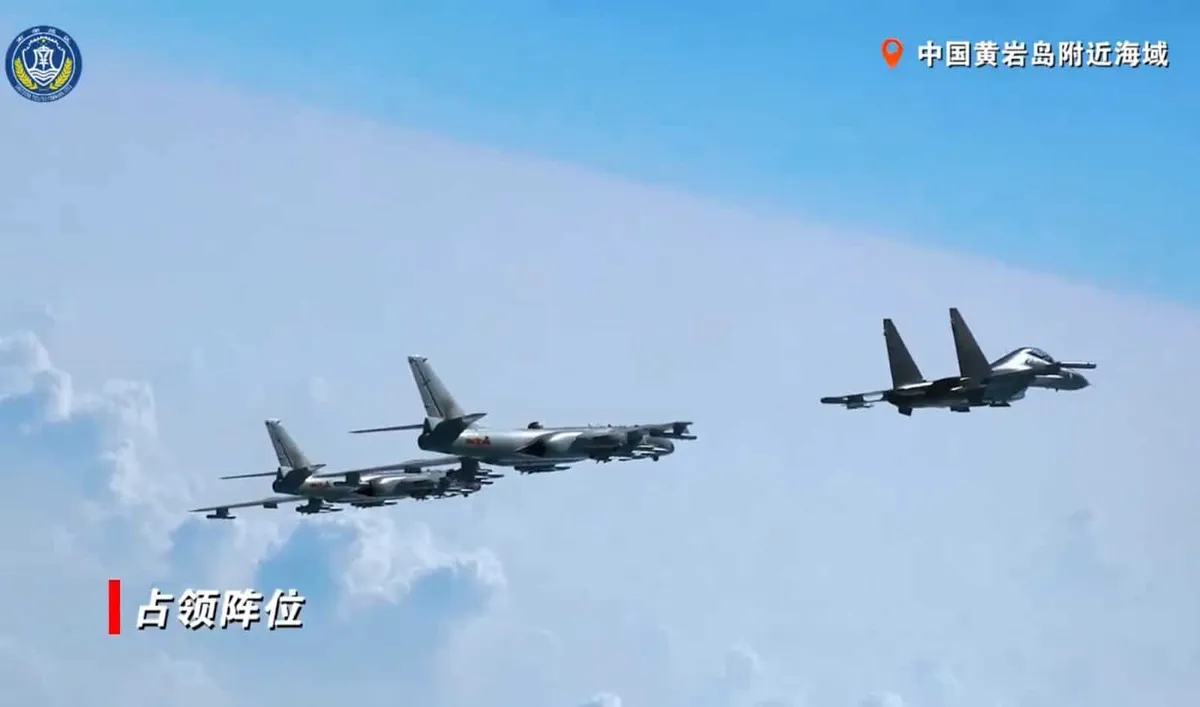
The timing — during Balikatan — is the operative detail. Beijing is not trying to hide the operation; it's publicizing it. This tells allied air defense planners that future large-scale exercises in the Philippines will trigger PLA air activity, which creates a secondary planning burden: how much of the exercise airspace must be reserved for deconfliction or air defense?
If Balikatan involves hundreds of sorties and the PLA commits even a small intercept package to the area, exercise controllers lose flexibility. That's the coercive mechanism — not kinetic disruption, but friction in allied training.
This is a calibration move, not escalation.
Beijing is signaling capability and resolve during a major US-Philippine exercise without crossing into direct interference with the drills themselves — no interception of aircraft, no forced landings, no shots fired. The PLA is using airspace over a disputed feature to remind Washington and Manila that the South China Sea remains contested, particularly as US-Philippine military integration deepens.
What matters operationally: the timing suggests the PLA Eastern Theater is monitoring Balikatan in real time and can generate a credible response package (bombers plus fighters) within hours. For allied planners, this confirms what satellite imagery already shows — the PLA maintains persistent air readiness in the region.
For Manila, it's a reminder that larger exercises attract PLA attention and carry political risk.
Did the PLA bombers actually conduct an anti-ship targeting run, or was this a show-of-force transit? The distinction matters for assessing whether Beijing is rehearsing attack profiles or simply demonstrating presence.
Fault Lines
Strategic intelligence, synthesized daily — with a public track record. Every call graded against what actually happened.