Ukrainian Strikes Destroy Two Russian Landing Ships, Radar, Fuel Depot in Single Night
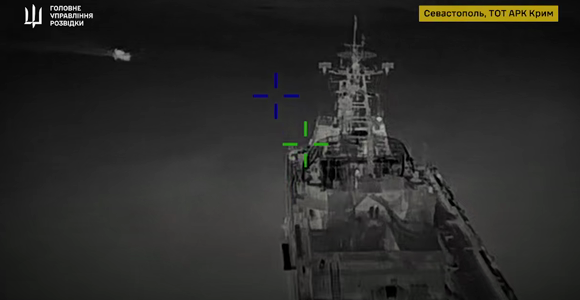
Sustained degradation of Russian amphibious capacity reduces Moscow's options for forcing a landing in contested coastal territory (Odesa, Crimean logistics corridors). This tightens the operational window for Ukrainian counteroffensives in southern regions where Russian forces depend on sea-based resupply.
Fuel depot strikes also compress Russia's ability to sustain air operations from forward bases, which cascades into reduced air superiority over the Donbas — forcing more reliance on stand-off cruise missile strikes, which are expensive and inventory-constrained.
Russia's amphibious assault capability is finite and irreplaceable in the near term.
Two landing ships represent a measurable loss to an already-degraded force structure — Russia has lost significant amphibious capacity over two years of war, and shipyard capacity to replace it does not exist outside of a multi-year reconstruction effort.
If the $5 million radar system is a Kasta or Positive-E2 (air search variants in use with Russian naval forces), this degrades early warning coverage for Black Sea Fleet or Sea of Azov operations. The fuel depot strike directly constrains sortie generation for sustained operations.
This is attrition at work, not a strategic turning point — but it confirms Ukraine's ability to strike rear-area logistics and capital assets, which forces Russia to disperse and harden facilities at cost.
Which specific landing ships were destroyed — Ropucha-class, Alligator-class, or newer Tapir-class? The article doesn't specify, and ship type matters for replacement timeline and operational impact.
Fault Lines
Strategic intelligence, synthesized daily — with a public track record. Every call graded against what actually happened.