Mexico Deploys Thousands of Troops After Drug Lord Death; Cartel Succession Risk Escalates
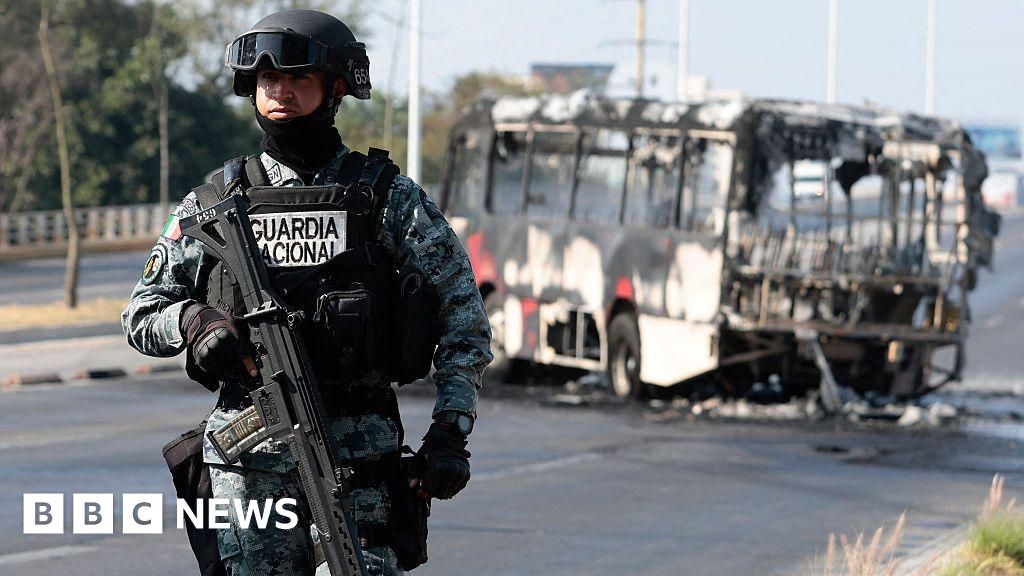
Mexican state fragility during cartel succession cycles forces U.S. Southern Command to increase intelligence collection requirements and forward-position personnel for contingency support to Mexican security forces — a demand signal that flows to ISR contractors (Palantir, Booz Allen) and special operations support vendors.
If the Mexican military deployment fails to consolidate control within 6-9 months, expect congressional pressure on DHS/CBP for increased border security funding in FY27 appropriations, which will compete with Indo-Pacific procurement priorities.
Cartel leadership vacuums in Mexico historically trigger 12-24 month periods of elevated violence as subordinate factions compete for control and supply-chain dominance.
This matters for U.S. defense planning because Mexican instability directly affects border security posture (CBP staffing, DHS procurement), DEA/ATF operations that feed into intelligence requirements for Southern Command, and the operational environment for U.S. law enforcement agencies that rely on Mexican military coordination.
The scale of the Mexican military deployment is the key variable: if this involves sustained presence in key trafficking corridors (Sinaloa, Jalisco, Michoacán), it signals Mexico is attempting to prevent a power vacuum from destabilizing its own state capacity. If deployment is reactive and limited, expect a 6-12 month period of cartel fragmentation and cross-border spillover.
The article does not specify which cartel, which leader, or which regions are affected — critical gaps for assessing whether this is a localized succession or a national-level reorganization.
Which cartel and which leader? Which Mexican states are receiving troop deployments, and in what numbers? What is the current status of the competing factions, and which has the strongest claim to succession?
Fault Lines
Strategic intelligence, synthesized daily — with a public track record. Every call graded against what actually happened.