Netherlands Selects F21 Torpedo for Orka-Class Subs; First NATO SSK Operator
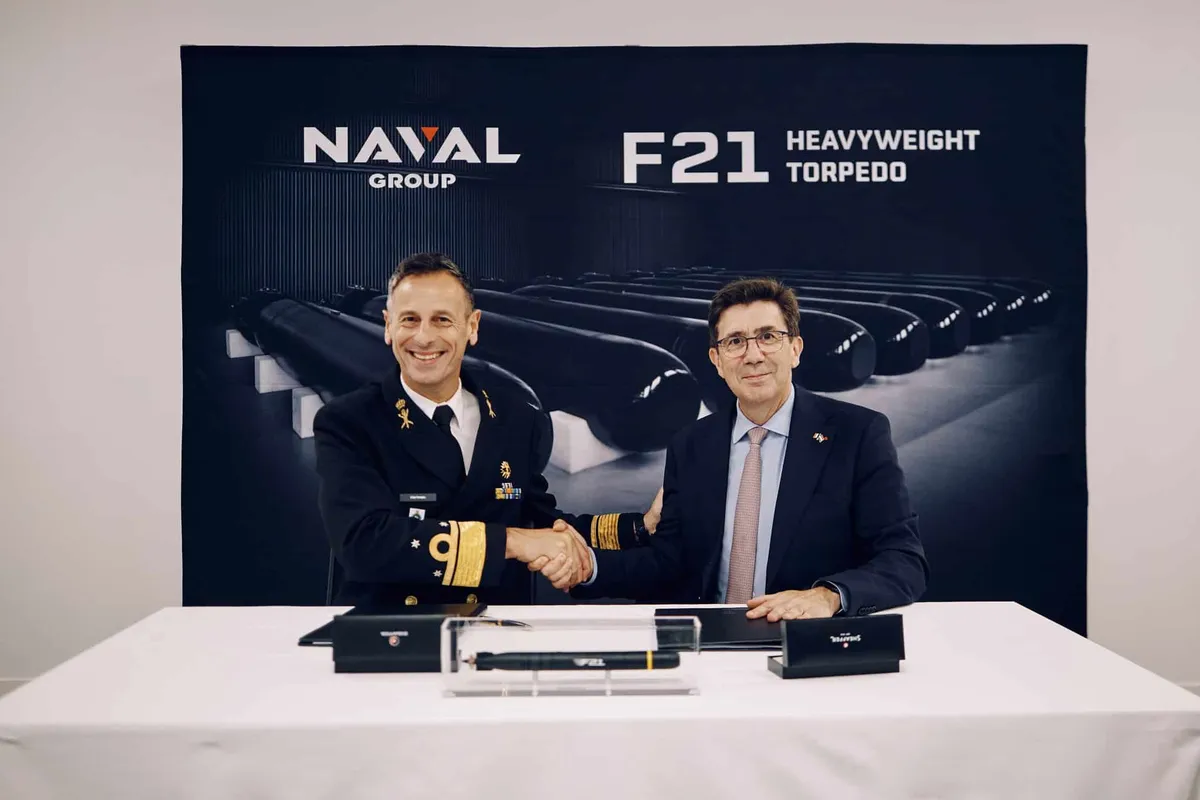
The F21 contract is a procurement win for Naval Group but a latent constraint for NATO. If Germany, Sweden, and Italy all select F21 for their SSK modernizations (a likely outcome given interoperability pressure), the demand signal could exceed Naval Group's production throughput — forcing either delayed deliveries or cost escalation.
The alternative is fragmentation: some allies stick with legacy torpedoes or choose competing systems (like the Swedish Mk.54), which fractures the NATO submarine force into incompatible targeting ecosystems. The Dutch signature is the first domino; watch whether it triggers a standardization rush or reveals production limits that force allied navies to hedge their bets.
This contract signals NATO's commitment to standardizing next-generation submarine weapons across allied fleets, but it exposes a critical gap: the F21's integration timeline and production capacity against the accelerating undersea competition in European waters.
Vice Admiral Jan Willem Hartman's signature locks the Dutch into a multi-year delivery schedule at a moment when Russian shadow fleet activity in the North Sea and Baltic is forcing allied navies to shorten reaction times. If the F21 delivery cadence slips beyond 2028, the Orka-class enters service with a weapon system that may already be tactically obsolete against evolved Russian countermeasures.
Watch whether other NATO SSK operators (Germany, Sweden, Italy) commit to the same platform by Q4 2026 — standardization unlocks interoperability but also creates a single point of failure if production bottlenecks emerge.
What is the actual production capacity of Naval Group's F21 line, and does it support simultaneous deliveries to multiple NATO customers without extending individual timelines?
Fault Lines
Strategic intelligence, synthesized daily — with a public track record. Every call graded against what actually happened.