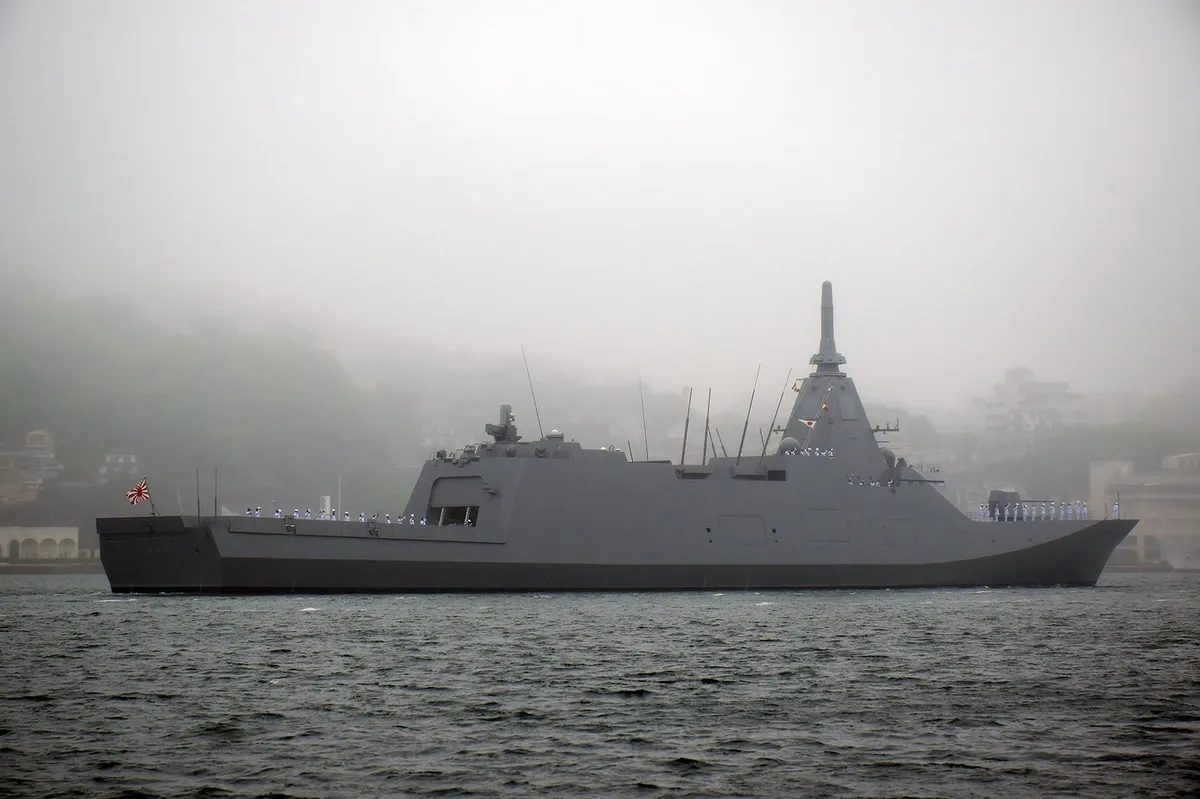
Japan Commissions Ninth Mogami-Class Frigate; Design Export Interest Accelerates
If Mogami production sustains at one hull per year but allied demand (Australia, Philippines, potential others) reaches two hulls per year, Japan faces the same capacity crunch that has plagued US shipyards. That pressure will either force allied nations to lengthen delivery timelines or push them toward alternative suppliers — exactly when China is marketing the Type 054A/B to Southeast Asia at half the price.
Tokyo's industrial advantage is real but brittle if it can't scale.
Japan is locking in the production cadence for a frigate design that allied navies are adopting at scale.
Australia's selection of the Mogami variant signals that Tokyo's shipbuilding is becoming the default platform for Indo-Pacific navies outside the US industrial base — a shift that concentrates Japan's capacity and forces allied procurement decisions into a single supply chain.
The JMSDF's ninth-hull delivery confirms Japan can sustain annual or near-annual frigate production, but that same capacity is now being competed for by Australia's Hunter-class program, South Korea's Daegu-class variants, and potential Philippine Navy orders. Watch whether the next JMSDF budget request includes a 10th Mogami or shifts to other platforms.
What is the actual production rate at MHI's Nagasaki facility — hulls per year — and how many are allocated to JMSDF versus export customers through 2030?
Fault Lines
Strategic intelligence, synthesized daily — with a public track record. Every call graded against what actually happened.