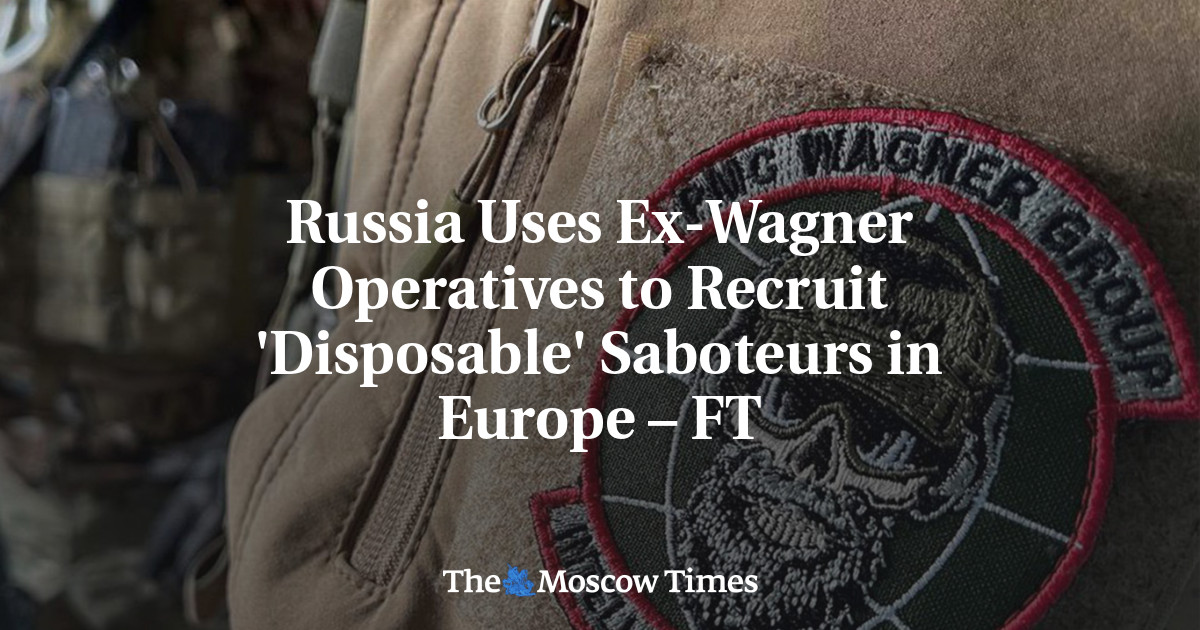
Russia recruits ex-Wagner operatives for European sabotage network
This is primarily an intelligence and counterintelligence story with direct implications for power projection. Russia is building a persistent sabotage capability against NATO logistics and industrial targets without committing uniformed forces—lowering escalation risk while raising the cost of NATO military readiness.
European defense contractors and suppliers to NATO will face elevated physical security requirements and insurance costs; supply chain resilience becomes a procurement variable for Allied defense budgets. This also signals that Russia views asymmetric disruption of industrial capacity as more cost-effective than direct military engagement.
This represents a shift in Russia's operational model: converting private military contractors into a distributed intelligence asset for sabotage rather than conventional military roles.
The use of ex-Wagner personnel lowers attribution risk and creates plausible deniability while maintaining operational continuity. For NATO defense planners, this means critical infrastructure (power grids, rail, communications, defense industrial base) faces elevated asymmetric threat from operatives with combat training and existing European networks.
The key variable is whether European counterintelligence can disrupt recruitment pipelines faster than Russia can rebuild them after arrests—a race that will determine whether this becomes a persistent constraint on NATO-adjacent industrial operations or remains a manageable threat.
The article does not specify which European countries are primary targets, how many operatives have been recruited, or what specific infrastructure or facilities have been targeted to date. Without this granularity, defense contractors cannot assess their own exposure or inform security posture.
Fault Lines
Strategic intelligence, synthesized daily — with a public track record. Every call graded against what actually happened.