Embraer partnership with Northrop targets autonomous KC-890 boom to unlock international tanker sales
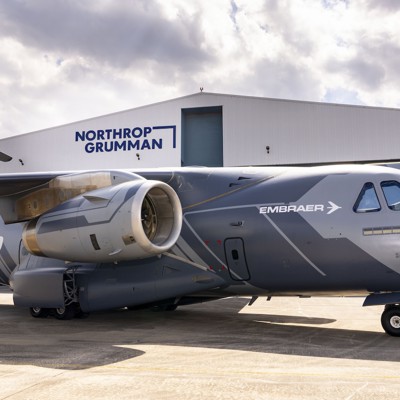
The autonomous boom architecture removes a critical technical barrier to allied tanker participation in U.S. operations, which directly affects force-projection doctrine in Pacific and European theaters where forward basing is constrained.
If the system matures, allied air forces operating Embraer-based tankers (or retrofitted variants) become interoperable with U.S. receiver fleets without requiring boom operators — reducing crew fatigue and enabling tighter formation refueling in contested airspace.
This shifts the KC-890 from a pure U.S. procurement into a potential NATO/Five Eyes interoperability standard, which competes with Boeing's KC-46 roadmap and forces the Air Force to choose between industrial consolidation and allied operational flexibility.
This signals Northrop's hedge against the Air Force's uncertain commitment to the KC-46A follow-on.
If the autonomous boom proves operationally viable and cost-competitive, it could influence the Air Force's KC-890 procurement strategy — potentially favoring a domestic-plus-allied supplier model over sole-source Boeing dependency.
For Embraer, the partnership provides a credibility bridge into U.S. military tanker programs; for Northrop, it expands addressable market among allies (NATO, Australia, Japan) while reducing technical risk through shared development.
The real constraint is Air Force acquisition timing: if the service delays KC-890 definition or downsizes the buy, the partnership's commercial leverage evaporates regardless of boom performance.
The article does not specify whether Northrop or Embraer will own the boom IP, whether this is a funded development contract or a joint study, or what Air Force officials have said about autonomous boom maturity requirements for KC-890 integration.
Fault Lines
Strategic intelligence, synthesized daily — with a public track record. Every call graded against what actually happened.