Anduril-Kraken Partnership Accelerates Navy Unmanned Fleet Deployment Amid Hormuz Blockade
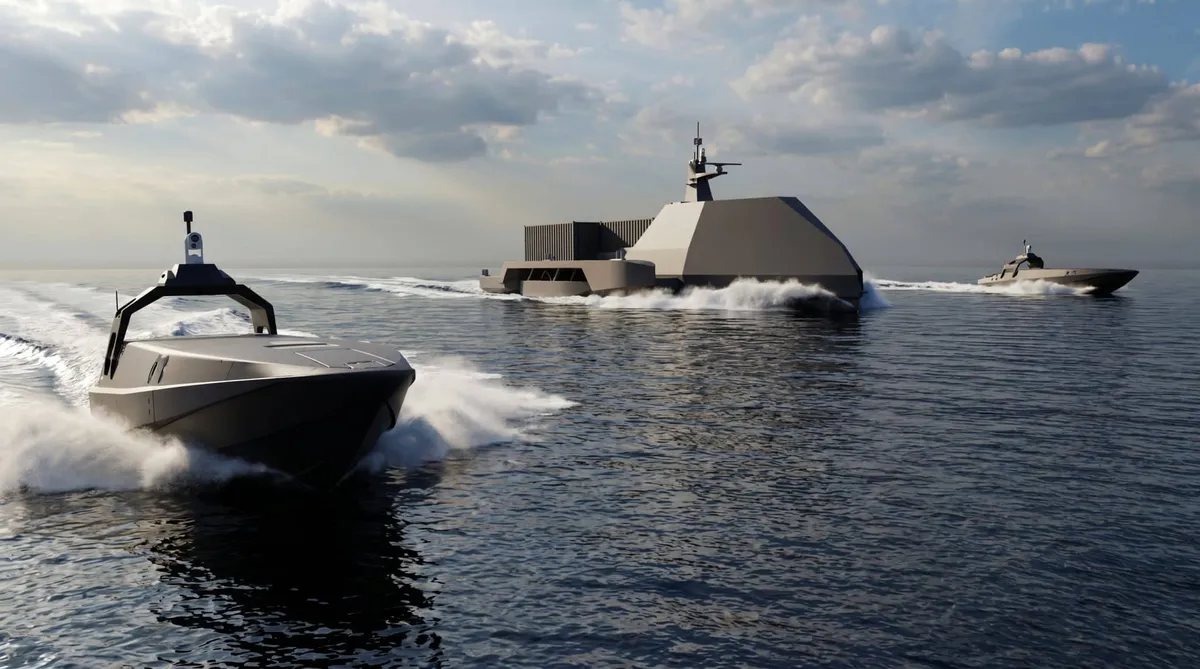
Hormuz blockade forces Navy to choose between manned surge capacity (slow, expensive) and autonomous platforms (faster, cheaper operationally).
Anduril-Kraken partnership signals private capital is pre-positioning for the autonomous bet, which means if Hormuz closure persists, Navy procurement timelines compress and traditional shipbuilders (Huntington Ingalls, General Dynamics) lose months of design-to-contract runway to startups with existing autonomy stacks.
This shifts the procurement advantage from primes with established Navy relationships to agile defense tech firms with proven autonomy IP.
This is a market signal, not a procurement decision.
Anduril and Kraken are betting the Navy will fund autonomous surface and subsurface platforms at scale — a bet that makes sense only if Hormuz closure becomes structural, not transient. The timing is not coincidental.
With three carrier strike groups now operating under traffic interdiction and the Abraham Lincoln CSG burning through fuel enforcing the blockade, the Navy faces a choice: add manned vessels (expensive, slow to build, crew-intensive) or accelerate autonomous platforms (capital-intensive upfront, but operationally cheaper in a sustained standoff).
If the Hormuz closure extends past Q3, expect this partnership to convert into a formal Navy contract within 6-9 months. If it resolves, the announcement becomes a marketing exercise. The real tell: watch whether Anduril and Kraken secure a Navy S&T contract before the end of FY26.
Does this partnership have Navy pre-positioning — i.e., did NAVSEA or OPNAV fund preliminary design work before the announcement — or is this a pure venture bet on a future RFP?
Fault Lines
Strategic intelligence, synthesized daily — with a public track record. Every call graded against what actually happened.