Finland Lifts Nuclear Weapons Ban; NATO's Northern Flank Opens to US Deployments
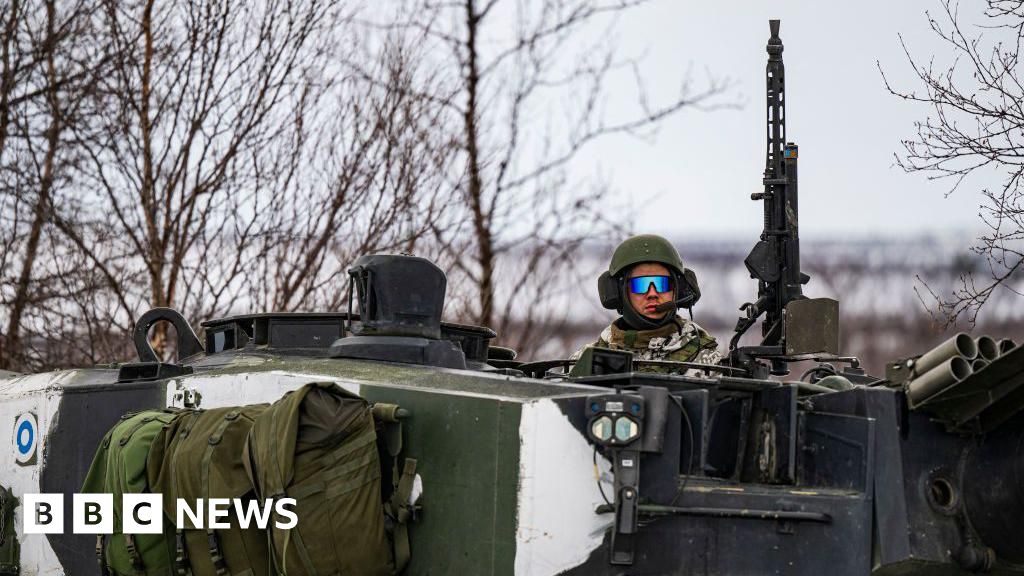
Finland's nuclear basing decision directly reduces the operational cost of forward-deployed US nuclear deterrence in Europe, allowing the Pentagon to trade expensive bomber and submarine rotations for fixed land-based storage.
This intersects with the ongoing Iran conflict by signaling to Russia that even while the US absorbs casualties and sustains kinetic operations in the Middle East (Al Udeid strike, submarine sinking Iranian frigate), NATO's nuclear posture is advancing — a credibility test for extended deterrence in Europe that Moscow will interpret as either resolve or overextension depending on how long US air operations in Iran persist.
This removes a legal barrier to forward-deployed US nuclear forces on NATO's eastern border with Russia, extending the nuclear umbrella 830 km closer to Moscow and reducing US intercontinental bomber response times to Russian territory.
Finland's geography — a 1,300 km border with Russia and proximity to St. Petersburg — makes it operationally valuable for both deterrence signaling and warhead survivability in a peer conflict.
The timing is not coincidental: it occurs as the US-Israel campaign against Iran enters day 6 with demonstrated willingness to conduct sustained kinetic operations without allied consensus, signaling to Moscow that NATO's nuclear posture is hardening even as the US prosecutes conflicts elsewhere.
Implementation requires constitutional amendment (likely 2026-2027), but once complete, creates a new forward-basing option that reduces dependence on existing NATO air bases in Germany and Turkey — both politically constrained by domestic opposition to nuclear deployments.
The article does not specify whether Finland intends to host tactical nuclear warheads (B61 gravity bombs) or strategic systems, nor does it address the timeline for constitutional amendment or US military planning to actually utilize such basing.
Fault Lines
Strategic intelligence, synthesized daily — with a public track record. Every call graded against what actually happened.