Marine Corps Demand for ARGs Doubles Stated Capacity; Every Combatant Command Requesting Simultaneous Deployment
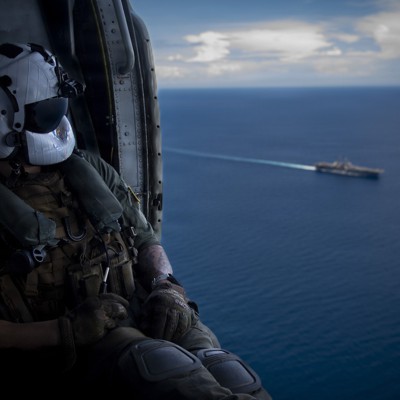
The ARG shortfall directly constrains power projection during the Iran crisis. With every combatant command competing for limited amphibious lift, CENTCOM's ability to surge additional ARG capability into the Persian Gulf or Arabian Sea depends on stripping presence from the Indo-Pacific — exactly when Taiwan contingency planning requires sustained forward positioning.
The shortage also surfaces in the FY27 FYDP markup: expect competing line items for ARG modernization (LCS, expeditionary transport dock) that pit near-term operational demand against long-cycle shipbuilding.
This is a readiness confession dressed as a staffing problem.
Six combatant commanders requesting ARGs simultaneously — when the Corps can sustain three — means the Indo-Pacific, Central Command, and European Command are all operating below their stated force requirement. The gap doesn't close with procurement; it closes with either fewer combatant commands, smaller ARGs, or accepted operational risk.
Against the backdrop of the Iran blockade (now two months old), Israeli-Lebanese escalation, and Taiwan contingency planning, this admission that the Navy-Marine team cannot simultaneously meet demand in three theaters is the kind of structural constraint that forces hard choices in the next FYDP cycle.
Expect budget fights over ARG modernization and pressure to reduce the number of combatant commands or shrink their AOR.
Which combatant command is being told 'no' — or are all six accepting degraded ARG rotations? The Commandant's statement doesn't clarify whether the demand is for simultaneous presence or acceptable surge rotations.
Fault Lines
Strategic intelligence, synthesized daily — with a public track record. Every call graded against what actually happened.