Ukraine Scales Deep-Strike Drone Operations to 100K+ Monthly Sorties; Command Expands Unit Structure in May
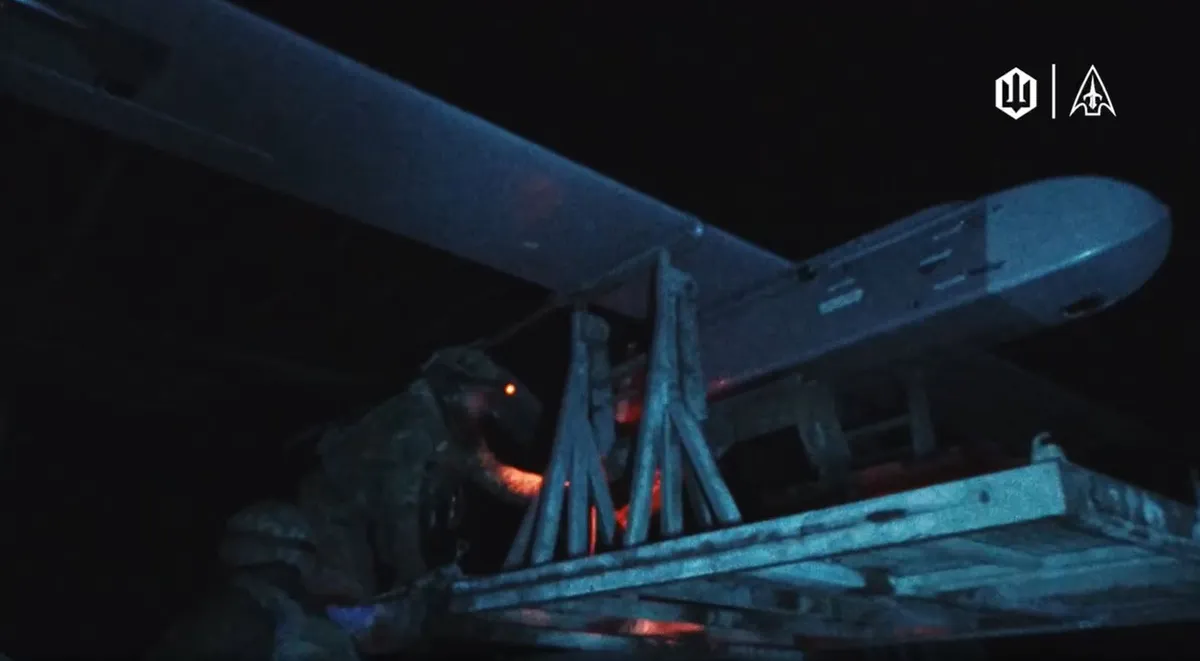
Sustained Ukrainian drone scaling forces a reallocation of NATO air defense procurement away from legacy radar-guided systems and toward short-range kinetic or directed-energy interception — a 24-month shift that benefits Raytheon (IFPC, CRAM) and Northrop (LRAD) over Lockheed (Patriot sustainment).
The operational proof that 100K monthly sorties remain sustainable also validates allied doctrinal assumptions about drone-centric warfare, accelerating F-35 Block 4 sensor fusion timelines and pushing NATO's SHORAD/MRAD modernization forward by 18 months.
Ukraine is industrializing drone warfare at a tempo that outpaces Russian air defense replacement.
A 100K+ monthly sortie rate across all ranges suggests Ukraine has solved logistics, pilot training, and attrition replacement — the three constraints that typically cap drone operations. The formal tier expansion in May signals confidence in sustained production and indicates Ukraine's military leadership believes it can maintain offensive drone pressure indefinitely.
This matters for NATO procurement: if Ukraine can field this volume with Western components and domestic assembly, allied air defense budgets will face pressure to redirect from legacy systems into loitering munition and drone interception. Russia's air defense losses are now a measurable constraint on its own air operations, not a theoretical one.
What is the actual monthly production rate of Ukrainian drones, and does it exceed the stated sortie rate? The 100K figure could reflect attrition-adjusted sorties (drones flown multiple times) or new airframes built.
Fault Lines
Strategic intelligence, synthesized daily — with a public track record. Every call graded against what actually happened.