SeaOwl and KNDS Unveil Tracus Kamikaze USV With 200km Range and 30kg Warhead at Euronaval 2026
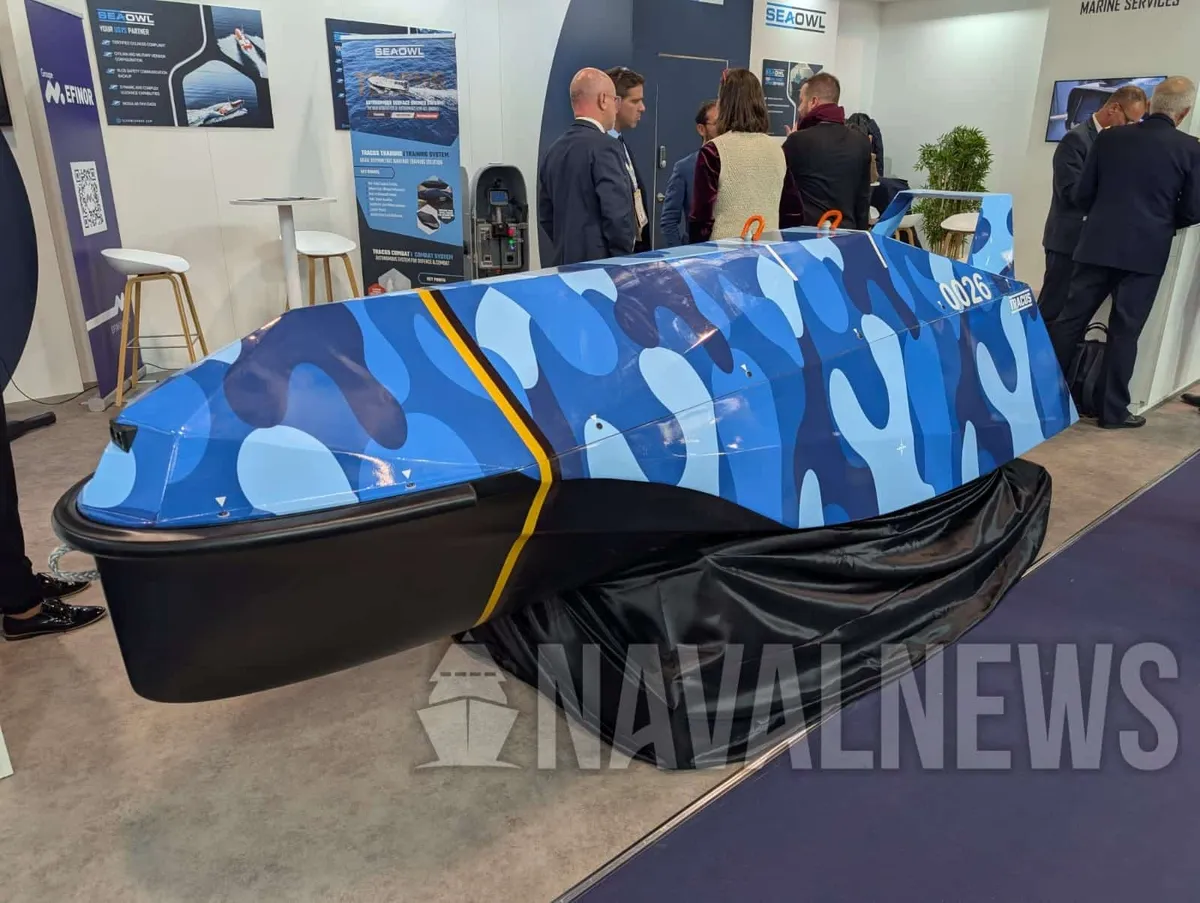
If Tracus moves from exhibition to French Navy contract, KNDS gains a production line for a low-cost offensive USV warhead that sits below the threshold of major munitions procurement scrutiny — the same cost-asymmetry logic that made Iranian and Houthi kamikaze drones operationally attractive.
The dual-mode warhead design (anti-ship fragmentation and anti-swarm blast charge) means a single platform competes in two distinct mission sets, which strengthens the unit economics case for procurement and puts pressure on dedicated counter-swarm programs at Naval Group and Thales to justify their cost per intercept.
French Navy procurement offices now have a domestically sourced offensive USV option that evolved directly from an asymmetric-threat training program, which means the capability gap between training simulation and live weapon is narrower than most allied navies have planned for.
The 200km range and ship-launched box system make Tracus compatible with existing French surface combatants without a dedicated platform, removing the usual integration cost that delays fielding. KNDS's warhead specification — a 3-meter breach in first-rank frigate hulls — sets a public lethality benchmark that NATO naval planners will have to account for in force-protection doctrine.
Has the French Navy formally expressed procurement interest, or is this still a commercial offering seeking a first customer beyond the training role?
Fault Lines
Strategic intelligence, synthesized daily — with a public track record. Every call graded against what actually happened.