Babcock Rolls Out HMS Active; Type 31 Programme Maintains 5-Ship Delivery Cadence
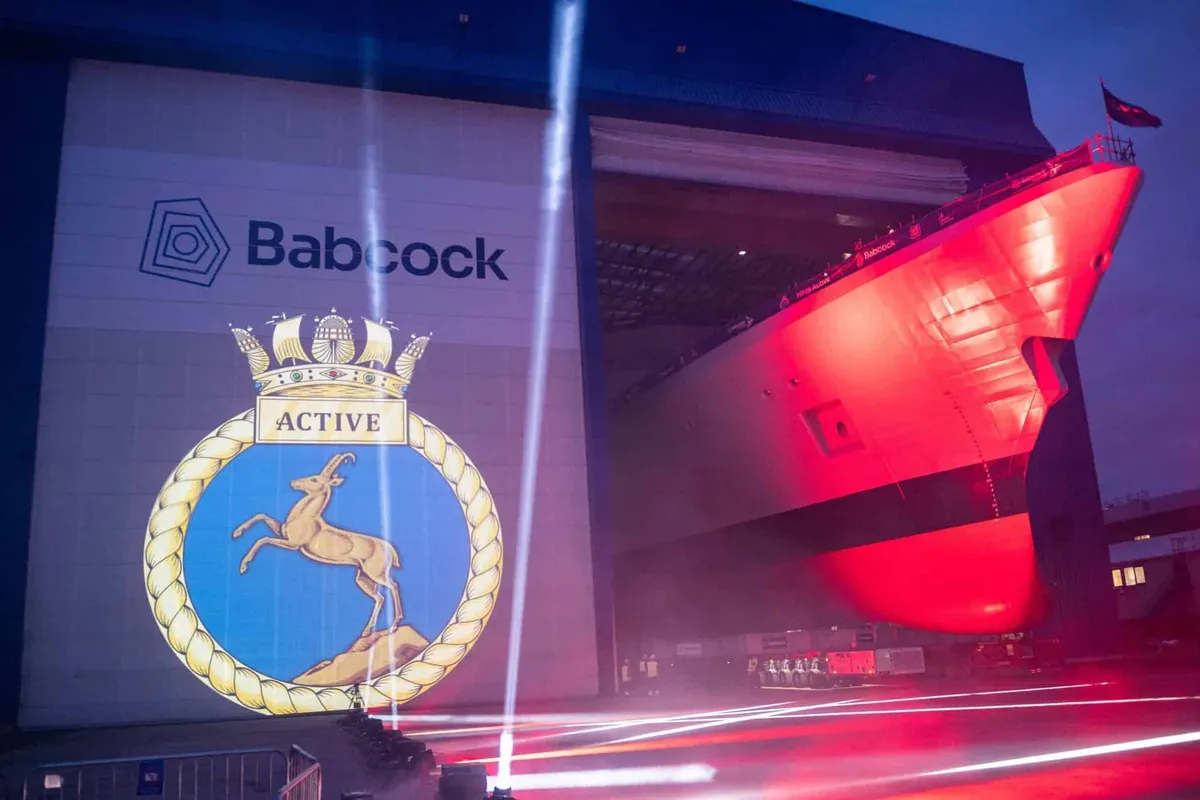
Sustained Type 31 production directly affects UK frigate availability for NATO commitments and Indo-Pacific taskings. If Babcock maintains this cadence, the Royal Navy will have two operational ships (HMS Inspiration, HMS Tamar) by 2027–2028, with three additional hulls in build — this shapes UK carrier strike group escort rotations and NATO Standing Naval Force composition planning.
Conversely, any delay in HMS Active acceptance trials or subsystem integration would compress the Royal Navy's available frigate pool precisely when NATO is extending patrol commitments in the High North and the Indo-Pacific.
The Type 31 programme represents £1.3B+ of UK naval procurement and is the primary frigate modernization vehicle for the Royal Navy through the 2030s.
Rollout of the second ship and steel cut for the third indicates Babcock is maintaining production cadence, which was a stated risk under the original contract. However, the article provides no data on whether deliveries remain on schedule relative to the original contract baseline or whether costs have escalated — both critical to assessing whether the programme is tracking or slipping.
For investors in UK defense supply chains (Babcock, Rolls-Royce Marine, and subsystem integrators), this confirms active production but leaves capital-allocation risk unquantified.
The article does not state: (1) planned delivery dates for HMS Active and HMS Bulldog relative to contract milestones; (2) current programme cost status or any overruns; (3) whether the 5-ship programme remains fully funded in the UK defence budget; (4) status of integration of key subsystems (propu...
Fault Lines
Strategic intelligence, synthesized daily — with a public track record. Every call graded against what actually happened.