Estonia Targets CV90 Co-Production to Backfill Hägglunds Supply Constraints
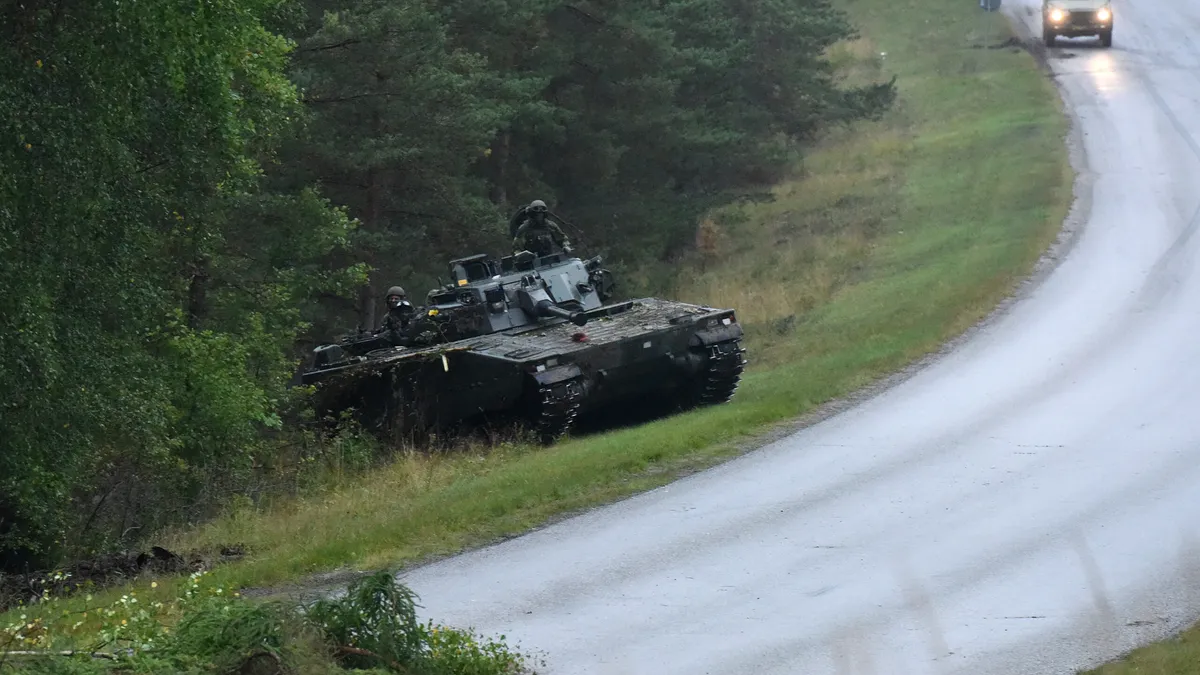
CV90 platform fragmentation across multiple production sites creates a procurement advantage for allied operators but introduces a sustainment liability — each production node risks divergent build standards, spare parts incompatibility, and training overhead.
If Estonia succeeds, it pressures other CV90 users (Finland, Denmark, Netherlands) to negotiate similar arrangements, converting Hägglunds from sole supplier to prime contractor managing a distributed supply network.
This shifts procurement power from manufacturer to allied customer coalition, but only if multiple states pursue parallel co-production; a single Estonian node without broader adoption leaves Hägglunds' bottleneck unresolved.
This signals potential localization pressure on the CV90 platform across Nordic/Baltic allies facing near-term vehicle shortages.
If Estonia secures co-production rights, it would establish a secondary manufacturing node for a NATO-standard platform outside Sweden, reducing single-source dependency on Hägglunds but fragmenting the supply base and complicating spare parts logistics. The viability depends on whether Hägglunds and Swedish export authorities permit technology transfer and whether Estonia can achieve cost-competitive production.
For CV90 operators (Finland, Denmark, Netherlands, Norway, others), this could accelerate delivery timelines but introduce compatibility or support complexity if Estonian-built vehicles diverge in configuration or maintenance protocols.
The article does not specify: (1) whether Estonia has approached Hägglunds or received any formal interest; (2) what production capacity Estonia could realistically deliver or by what date; (3) whether this would be licensed assembly, full manufacturing, or component-level work; (4) Swedish governme...
Fault Lines
Strategic intelligence, synthesized daily — with a public track record. Every call graded against what actually happened.