EU deploys sovereign quantum computer in Germany; signals infrastructure independence from U.S. cloud
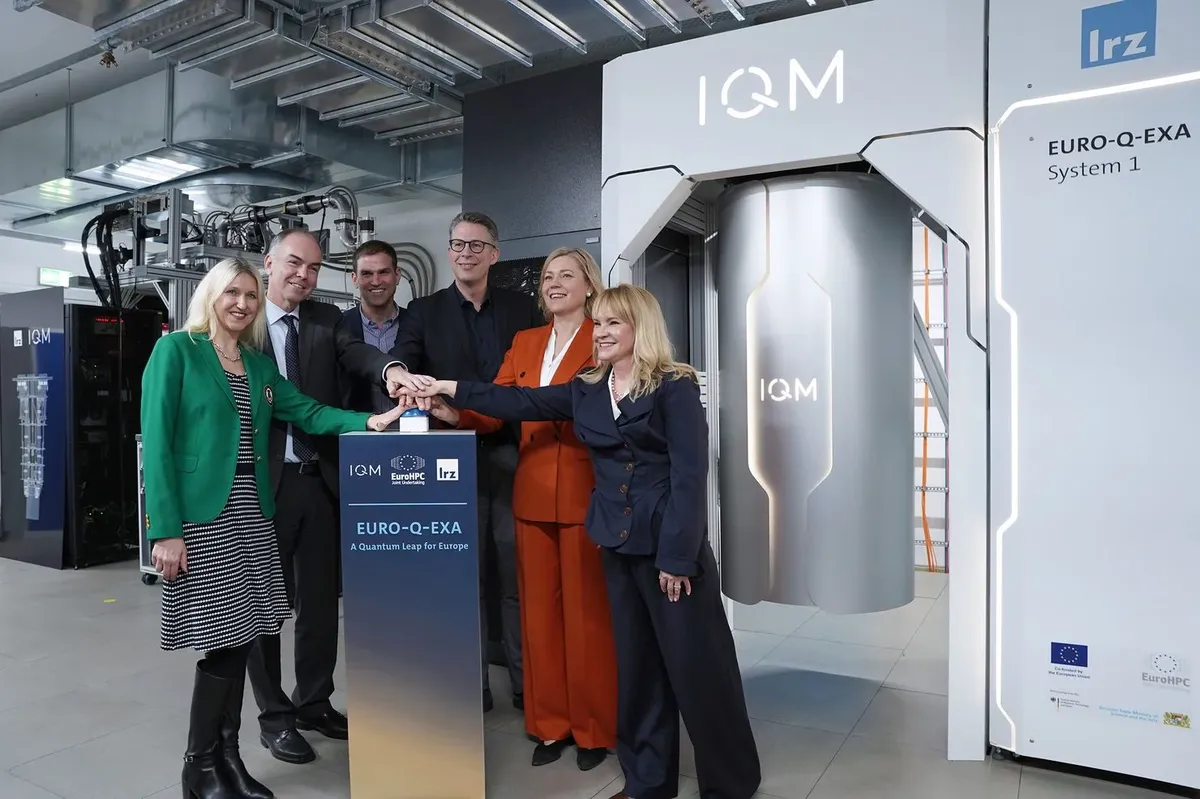
Primary pillar is Trade & Industrial Policy / Export Controls: EU is building institutional independence from U.S. quantum cloud providers, reducing exposure to potential U.S. export controls or data residency restrictions.
Secondary connection to Power Projection is weak and speculative—quantum computing has dual-use potential (cryptanalysis, materials simulation) but the article provides no evidence this system is operationalized for defense applications yet. Limited cross-pillar relevance; primarily a sovereignty and vendor-lock-in story at this stage.
This is a symbolic and operational milestone in EU efforts to reduce dependence on U.S.-controlled quantum computing infrastructure, but the immediate market and capability impact is limited.
The deployment signals commitment to a European quantum ecosystem and may drive vendor selection preferences toward EU-aligned suppliers (e.g., Atos, IQM) in government contracts. However, the article does not specify compute capacity, application roadmap, or comparison to U.S. or Chinese quantum systems, making it impossible to assess whether this closes any actual capability gap or is primarily a sovereignty play.
Defense and dual-use applications (cryptanalysis, optimization) remain theoretical until use cases are published. Watch for: (1) which defense or critical infrastructure agencies gain access, (2) whether NATO allies begin routing quantum workloads through LRZ instead of U.S. providers, (3) export control implications if non-EU entities request access.
The article does not disclose the system's qubit count, error rates, application roadmap, or how it compares in performance to existing quantum systems (IBM, IonQ, Google, or Chinese platforms)—essential data for assessing whether this is a capability advance or a political infrastructure statement.
Fault Lines
Strategic intelligence, synthesized daily — with a public track record. Every call graded against what actually happened.