Imec Demonstrates High-NA EUV Quantum Dot Qubit; Aligns Quantum Roadmap With AI Chip Manufacturing
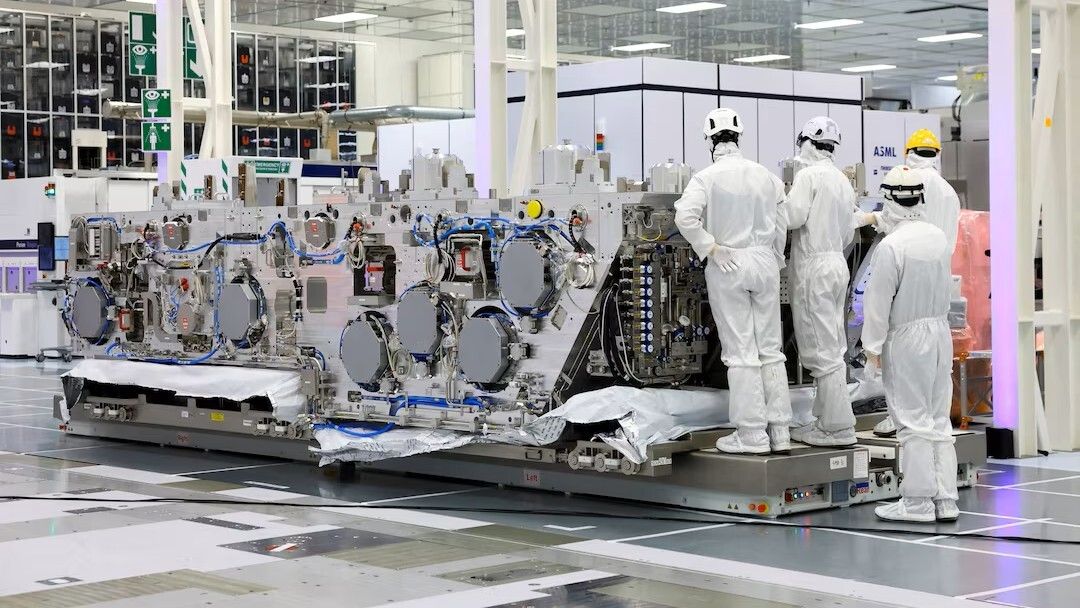
If this holds, the geopolitical implication is immediate: US export controls on advanced chip tools (ASML High-NA EUV, EDA software) now constrain quantum development in China and Russia as a side effect of AI chip controls, not by design. China's quantum roadmap — currently 3-5 years behind the US — faces a new bottleneck: it cannot access the fabs or the process nodes needed to fabricate quantum devices at scale.
This assumes TSMC and Samsung honor US export rules, which they do. The second-order effect: US quantum startups (IonQ, Rigetti, D-Wave) gain access to foundry-grade manufacturing without building dedicated fabs, collapsing their capex requirements and accelerating commercialization timelines relative to any competitor locked out of advanced nodes.
This collapses a hard constraint that has isolated quantum computing from the semiconductor industry's existing fabrication ecosystem.
Until now, quantum devices required custom process nodes incompatible with commercial fabs — forcing separate supply chains, separate workforce training, and separate capital deployment. If High-NA EUV quantum fabrication scales to production volumes, TSMC, Samsung, and Intel can amortize quantum yield learning across their AI processor lines, compressing time-to-scale by an estimated 3-5 years.
The mechanism is brutal: quantum fabs no longer need independent capex. That capital stays in the hands of the three fabs that already dominate advanced nodes. Watch whether Imec publishes yield data and process node maturity benchmarks by Q4 2026 — without those, the claim remains a single-device proof.
What is the actual defect density on the Imec device, and how does it compare to commercial High-NA EUV defect rates on logic nodes? Without that number, it's unclear whether the process is genuinely compatible or just theoretically possible.
Fault Lines
Strategic intelligence, synthesized daily — with a public track record. Every call graded against what actually happened.