Space Force Awards $1.8B for Commercial Satellite Constellation to Replace GSSAP Surveillance Network
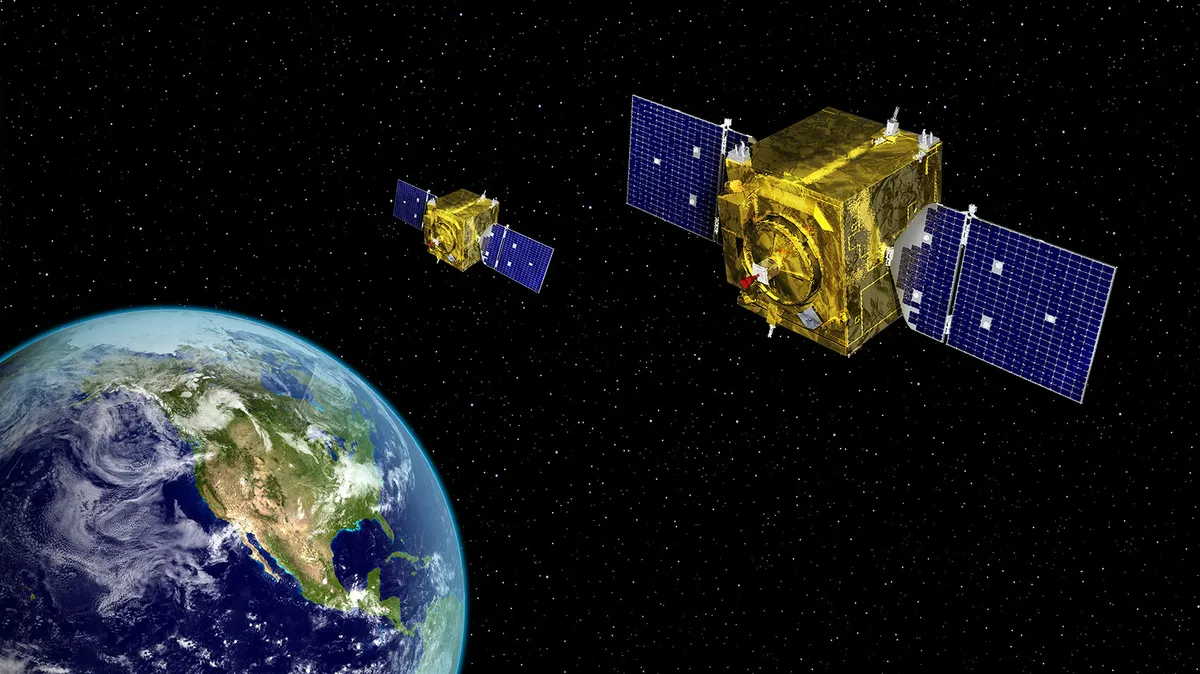
Commercial satellite dependency for GSSAP replacement directly intersects with the active Iran campaign's logistics chain — strike targeting depends on ISR refresh rates and constellation uptime.
If any of the 14 contractors face supply-chain disruption, export controls, or adversary targeting, the US loses real-time overhead capability precisely when Israel continues Lebanon strikes (April 8 signal: 182 killed) and Iran has blocked the Hormuz (April 8 signal).
Russia's demonstrated willingness to provide Iranian strike support via satellite imagery means the US now competes in the same commercial market against adversary ISR access — a market forces vulnerability that procurement alone cannot solve.
This procurement reflects a strategic shift from government-owned space surveillance to commercial-service dependency during an active conflict where satellite imagery directly supports strike operations.
Russia's provision of satellite imagery to Iran (per April 7 signal) underscores the vulnerability of relying on commercial constellation access — competitors or adversaries can exploit the same commercial market.
The 10-year task-order structure locks the Space Force into commercial vendor relationships at a moment when allied access to space-based ISR is fractured (Italy blocked US overflight on April 7, Russia and China vetoed Hormuz resolution). If any of the 14 contractors faces export restrictions, sanctions, or geopolitical pressure, GSSAP replacement capability could degrade mid-conflict.
The decision also exposes whether the government has adequately stress-tested commercial constellation resilience under active adversary jamming or kinetic threats.
The article does not specify which 14 firms won task orders, their current satellite capabilities, or whether any are foreign-owned or dual-use vulnerable.
Fault Lines
Strategic intelligence, synthesized daily — with a public track record. Every call graded against what actually happened.