UK Borealis Space Surveillance System Achieves IOC Six Months Early
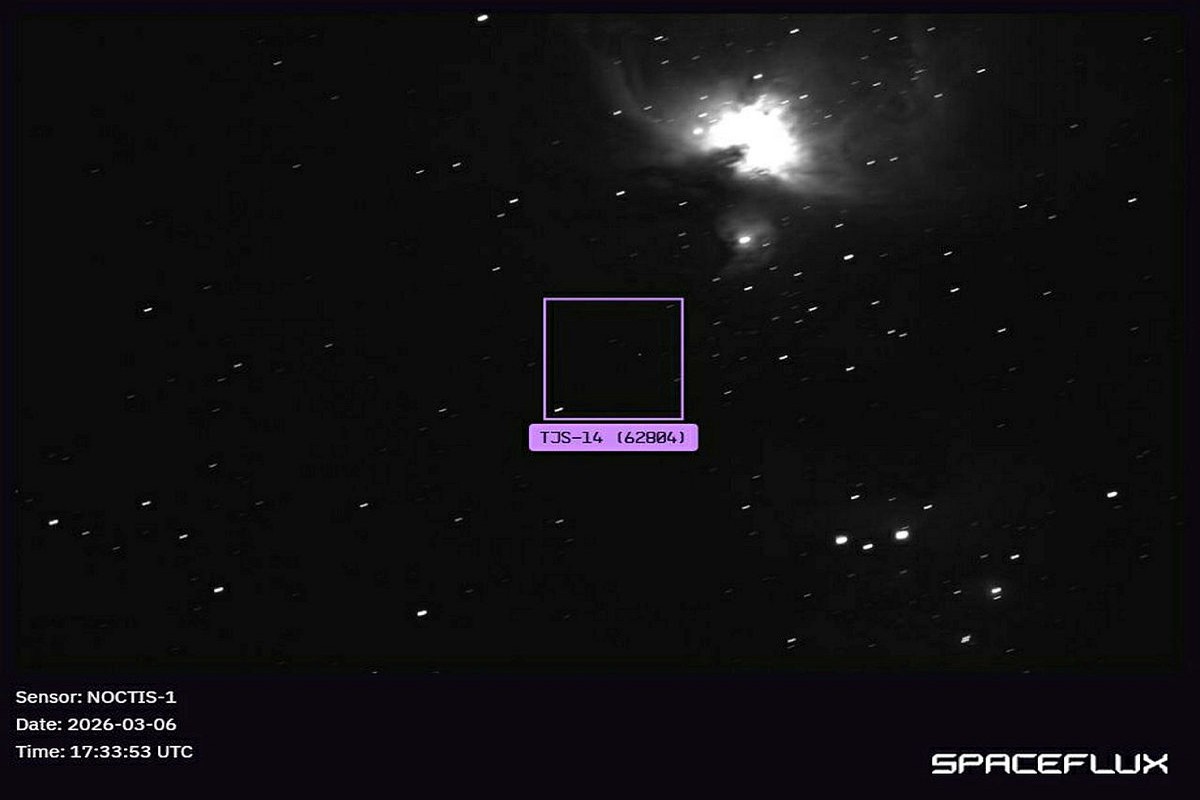
Borealis operationalization accelerates a NATO-level shift toward distributed space surveillance that doesn't rely on a single point of failure (US Space Force sensors). If the UK system can reliably detect and track maneuvering satellites, it becomes a reference for allied space domain awareness policies — forcing France, Germany, and Italy to fund their own sensors or formalize dependency.
The timing also matters: this arrives as China's space warfare doctrine matures and Russia has demonstrated ASAT capability. UK now has a card to play in AUKUS space architecture discussions with Australia and US.
UK Space Command now has an operational space surveillance capability to monitor threats in the orbital domain — a domain where neither the US nor Europe has yet fielded comprehensive persistent coverage independent of allied systems.
This closes a critical intelligence gap for NATO's eastern flank and frees UK from dependency on US Space Force ground stations for tactical space domain awareness. The six-month acceleration suggests either accelerated development or descoping of initial capability — the difference between a full-spectrum system and a focused counter-satellite detection layer.
Watch whether NATO's next strategic concept references Borealis as a shared asset or whether the UK retains operational control.
What is the actual coverage footprint of Borealis — does it monitor all near-Earth orbit, or is it focused on specific threat vectors (e.g., Russian/Chinese ASAT activity in GEO)? Six-month acceleration usually means descoping. What capability was deferred to Block 2?
Fault Lines
Strategic intelligence, synthesized daily — with a public track record. Every call graded against what actually happened.