1,300 Marines Deploy Anti-Ship Missiles to Philippines as US Operationalizes Sea Denial in First Island Chain
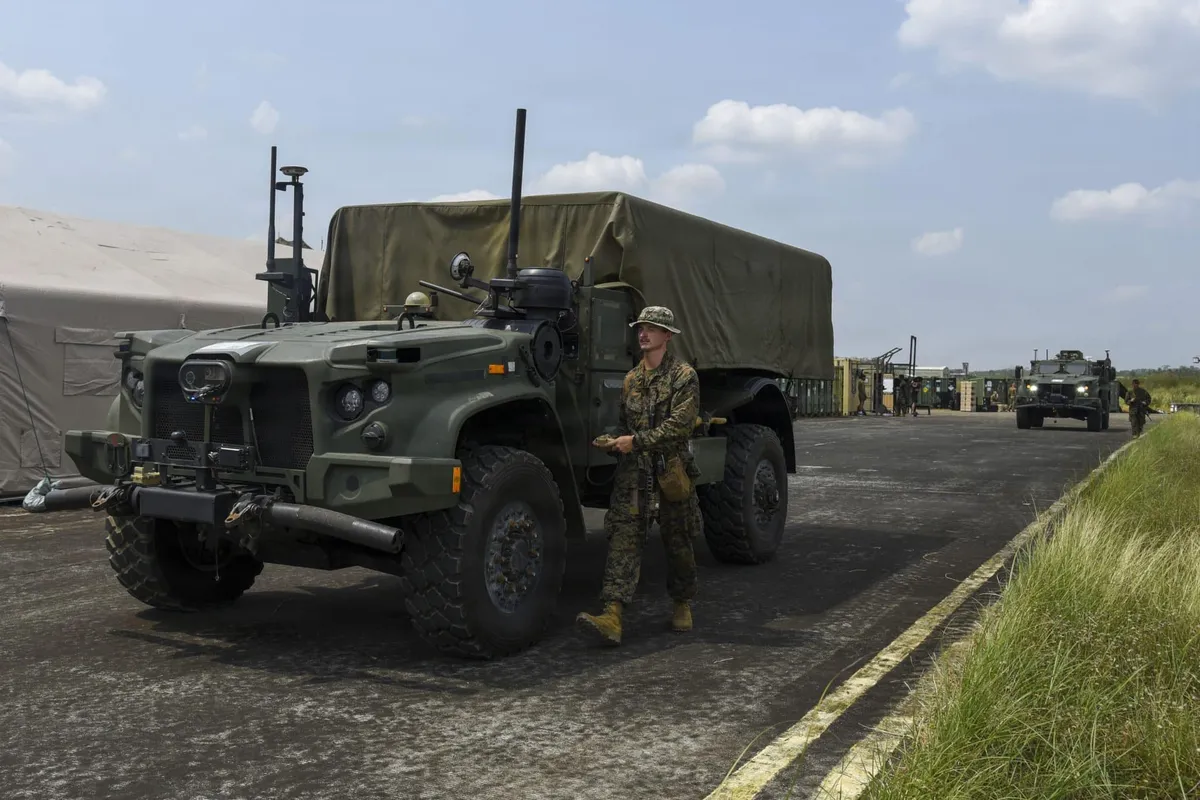
The Philippines deployment operationalizes the sea denial doctrine that Singapore warned about on April 22 as a 'dry run' for US-China conflict. If the Luzon Strait becomes a contested zone in a Taiwan contingency, U.S. anti-ship missiles based in allied territory would force the PLA Navy to either suppress them (escalating to direct strikes on Philippine soil) or accept attrition on contested passages.
This converts First Island Chain geography from a static chokepoint into an active denial layer, reducing the operational window for PLA amphibious operations against Taiwan and forcing Beijing to allocate air defense and strike assets to suppress allied missile sites rather than prosecute naval operations.
This is a direct response to the Hormuz blockade template.
The U.S. is now running the exact playbook it's executing in the Middle East—distributed missile platforms, allied chokepoint control, sea denial—but against China in the Pacific. The Philippines is volunteering to host a live-fire sea denial architecture 600 miles from Taiwan. This is not a training exercise framing; it's a capability demonstration for contingency planning.
If the exercise includes actual targeting of simulated PLA vessels transiting the Luzon Strait, the messaging to Beijing is unambiguous: the U.S. has operationalized the ability to contest the First Island Chain in real time.
The timing—simultaneous with three carrier strike groups in the Middle East and EU Article 42(7) activation—suggests Washington is stress-testing its ability to manage two simultaneous high-intensity maritime theaters.
Did the exercise include live-fire anti-ship missile shots, or only simulations? The distinction determines whether this is a capability demonstration or a training rotation.
Fault Lines
Strategic intelligence, synthesized daily — with a public track record. Every call graded against what actually happened.