Austal Lands Second LCH Contract, Consolidating Australian Naval Build Capacity
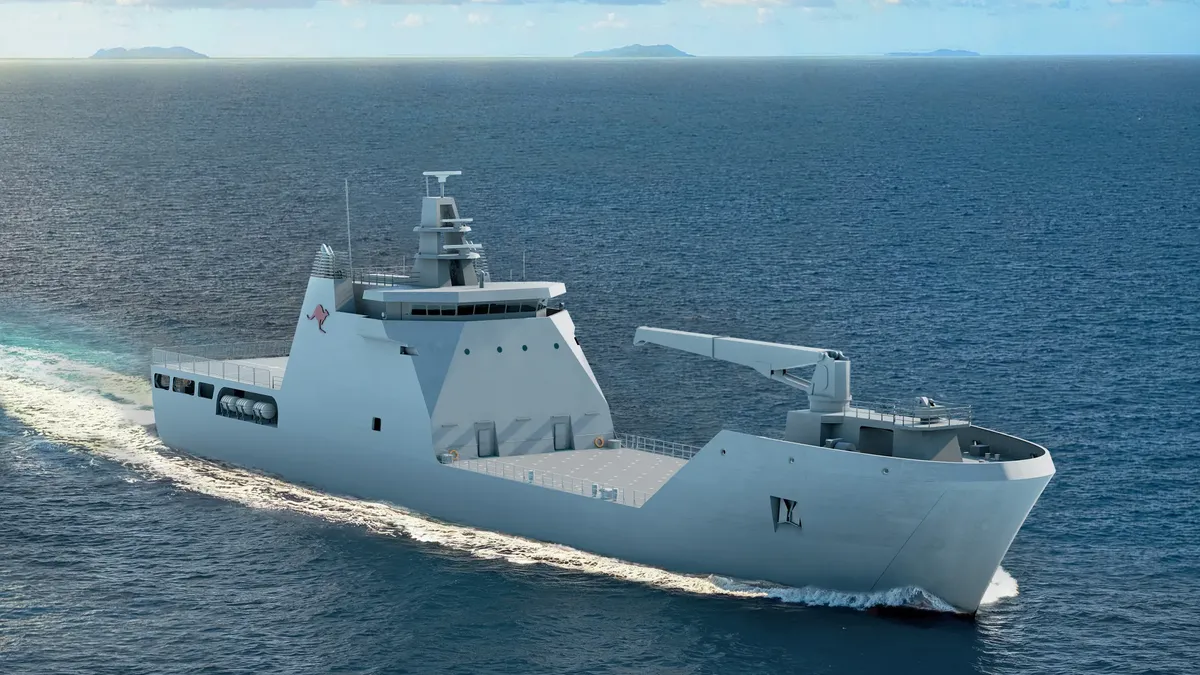
Repeated LCH orders allow Austal to amortize design and tooling costs across multiple units, lowering unit cost and freeing capital for concurrent work on other Australian naval programs (e.g., Arafura-class offshore patrol vessels, Hunter-class frigates).
If the second contract includes a multi-year production schedule, it also stabilizes the Henderson workforce and reduces the risk that Austal will shed skilled labor between production runs—a constraint that has historically compressed Australian shipbuilding capacity during gaps between contracts.
Repeat orders signal customer confidence in Austal's LCH design and production stability, reducing execution risk for the prime and anchoring long-term capacity at the Henderson, Western Australia facility.
However, the absence of contract specifics—value, delivery schedule, and whether this is a fixed second tranche or a new competitive award—leaves the actual business impact unclear. If this is a sole-source follow-on, it reduces near-term competition for Australian amphibious lift but also locks in Austal's margin assumptions.
The strategic value depends on whether the LCH production line now has sufficient visibility to justify capital investment in tooling and workforce scaling, or whether these remain single-ship economics.
The article does not specify: contract value, number of hulls, delivery timeline, whether this was a competitive or sole-source award, or how this order relates to the original LCH contract (is it a second tranche or a separate procurement event).
Fault Lines
Strategic intelligence, synthesized daily — with a public track record. Every call graded against what actually happened.