Space Force Consolidates Missile Warning Under Single Director; SDA Adds Satellite Tracking Authority
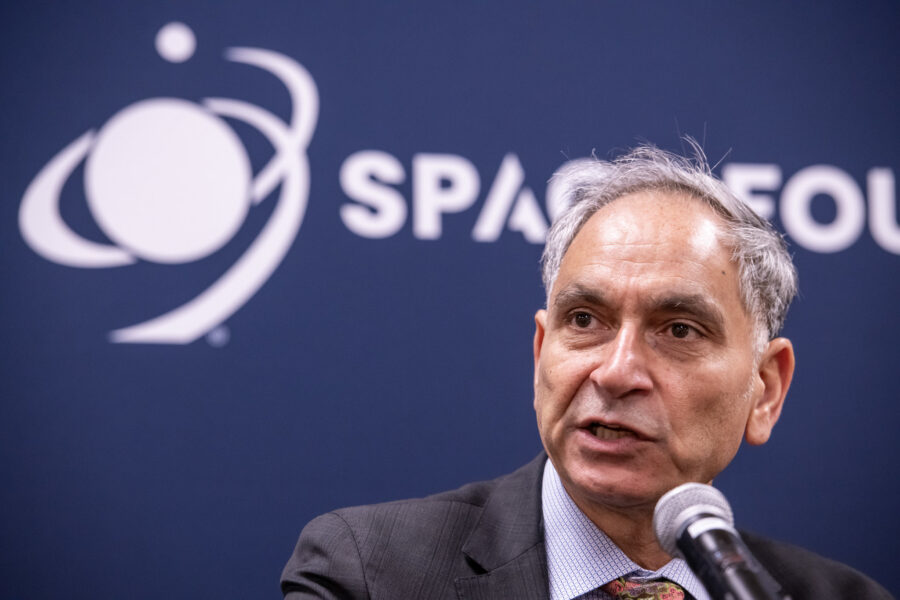
The consolidation exposes a bottleneck downstream: both OPIR and SBIRS feed the same ground architecture (the Missile Warning Center at Buckley). If OPIR slips (current baseline is 2029 IOC for Increment 1), the Space Force loses a hedge. Sandhoo's track record at SDA is speed-of-acquisition — but OPIR is a $15B+ program with congressional oversight that does not move at startup velocity.
If he pushes acceleration, he risks cost overruns that trigger Nunn-McCurdy review. If he doesn't, the SBIRS sunset becomes a real vulnerability window, likely pushing the Air Force to request emergency sustainment funding in FY28 or FY29 — the exact moment INDOPACOM is asking for expanded ISR coverage over the Taiwan Strait.
This consolidation forces a critical decision: whether the Space Force can actually execute a unified missile-warning architecture when SDA (experimental, fast-acquisition focused) and traditional ICBM-warning programs (DMSP, SBIRS, Next Generation Overhead Persistent Infrared) operate under different budget cycles and acquisition timelines.
Sandhoo now owns both the $2.8B OPIR constellation development and the legacy $1.2B annual SBIRS sustainment — programs that have historically competed for FY27 dollars. The mechanism is organizational: one director cannot simultaneously accelerate a next-generation satellite constellation AND maintain a legacy system in decline without forcing a hard choice on FYDP allocation by Q4 2026.
Watch the FY27 budget request (due to Congress in early 2027) for whether Sandhoo requests supplemental authority to extend SBIRS end-of-life or accelerates OPIR Increment 2 to cover the gap.
Does Sandhoo's appointment signal intent to retire SBIRS earlier than the current 2028-2030 timeline, or is the dual portfolio meant to preserve redundancy through a longer overlap period?
Fault Lines
Strategic intelligence, synthesized daily — with a public track record. Every call graded against what actually happened.