HMS Duncan Repels 72-Hour Drone-Missile Barrage, Tests UK Air Defense Under Sustained Attack
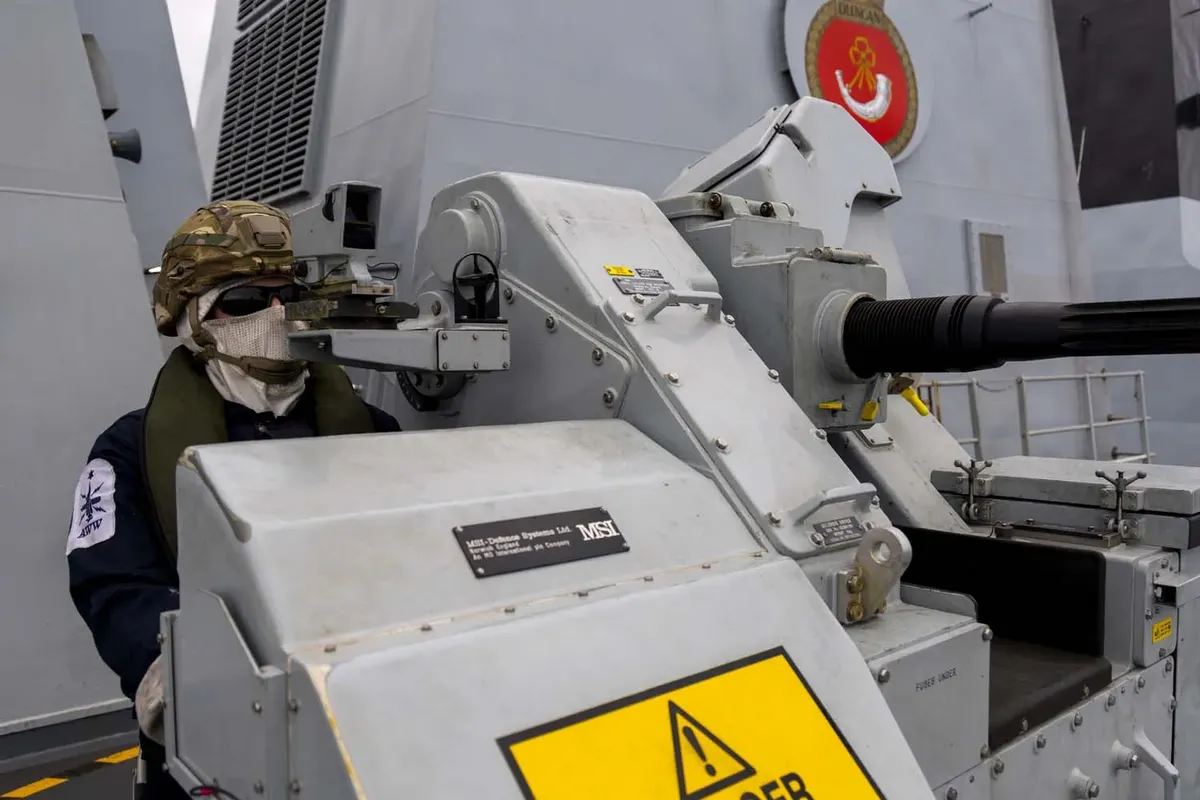
A demonstrated vulnerability in sustained multi-vector air defense directly constrains UK carrier task force deployment windows and NATO air-defense layer planning.
If Type 45 systems show fatigue or saturation thresholds under 72-hour attack profiles, the Royal Navy must either increase destroyer escort ratios per carrier strike group (raising operational costs and reducing available platforms for other taskings) or accelerate Type 26 frigate procurement to distribute air-defense burden across more hulls.
This cascades into the UK's FY27-28 shipbuilding budget decisions and NATO's integrated air-defense architecture for North Sea and Eastern Atlantic contingencies.
This signals that Type 45 air defense performance against distributed drone-and-missile attacks is being actively tested and validated in realistic conditions.
If HMS Duncan's PAAMS/Sea Viper system demonstrated reliable intercept rates across 72 hours of continuous engagement, it informs UK and NATO assumptions about destroyer survivability in peer-conflict scenarios where adversaries employ saturation tactics. The test outcome directly affects force-structure decisions for future Type 26 frigate air defense loadouts and NATO air-defense coordination protocols.
What we don't know — intercept success rates, failure modes, crew fatigue effects, or whether the exercise included realistic electronic countermeasures — will determine whether this translates into operational doctrine changes or procurement adjustments.
The article does not specify: intercept success rates, the composition of threats (drone types, missile variants, attack profiles), whether electronic warfare or countermeasures were employed, crew fatigue or system degradation over 72 hours, or whether results will inform changes to Type 45 operati...
Fault Lines
Strategic intelligence, synthesized daily — with a public track record. Every call graded against what actually happened.