Marines Overhaul Land Doctrine for Drone-Era Near-Peer Fight; Ground Combat Element 2040 Plan Unveiled
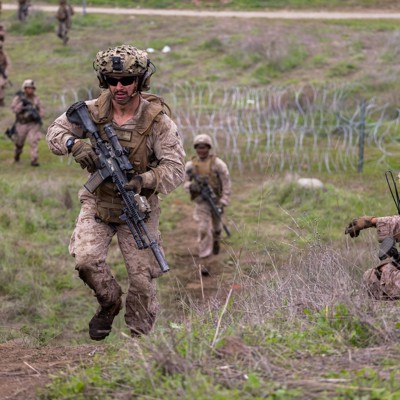
Doctrine adoption accelerates platform procurement timelines and locks out competitors who aren't already integrated into the force structure. If the Marines formally adopt distributed air-defense (short-range air defense, counter-UAS) as a squad-level requirement, it creates an immediate RFP window that favors incumbents like Raytheon and Northrop over new entrants.
This also constrains allied interoperability — if the 2040 doctrine assumes certain drone architectures and comms standards, allied forces (UK, Australia, Japan) will face pressure to adopt the same systems or accept degraded integration.
This is doctrinal signaling, not a procurement decision — yet.
The Marines are publicly committing to a force design centered on dispersed, air-denial-heavy formations, which will drive platform requirements and supplier strategy over the next 18-24 months. Watch for what gets cut to fund this pivot. If the Corps reduces legacy ground vehicle buys (Bradley variants, Humvees) to fund drone swarms and air-defense systems, that hits General Dynamics and AM General directly.
The timing matters: this doctrine drop comes as the Pentagon is locking FY27 budget submissions. A formalized doctrine can become a line-item driver faster than a threat assessment alone.
Does the Ground Combat Element 2040 plan specify a drone platform requirement (organic to the squad/platoon level), or is it still relying on higher-echelon ISR? If organic, which contractor gets the contract — AeroVironment, Skydio, or a new entrant?
Fault Lines
Strategic intelligence, synthesized daily — with a public track record. Every call graded against what actually happened.