Rheinmetall Secures €1.3B German Soldier System Contract; Further Calloffs Expected
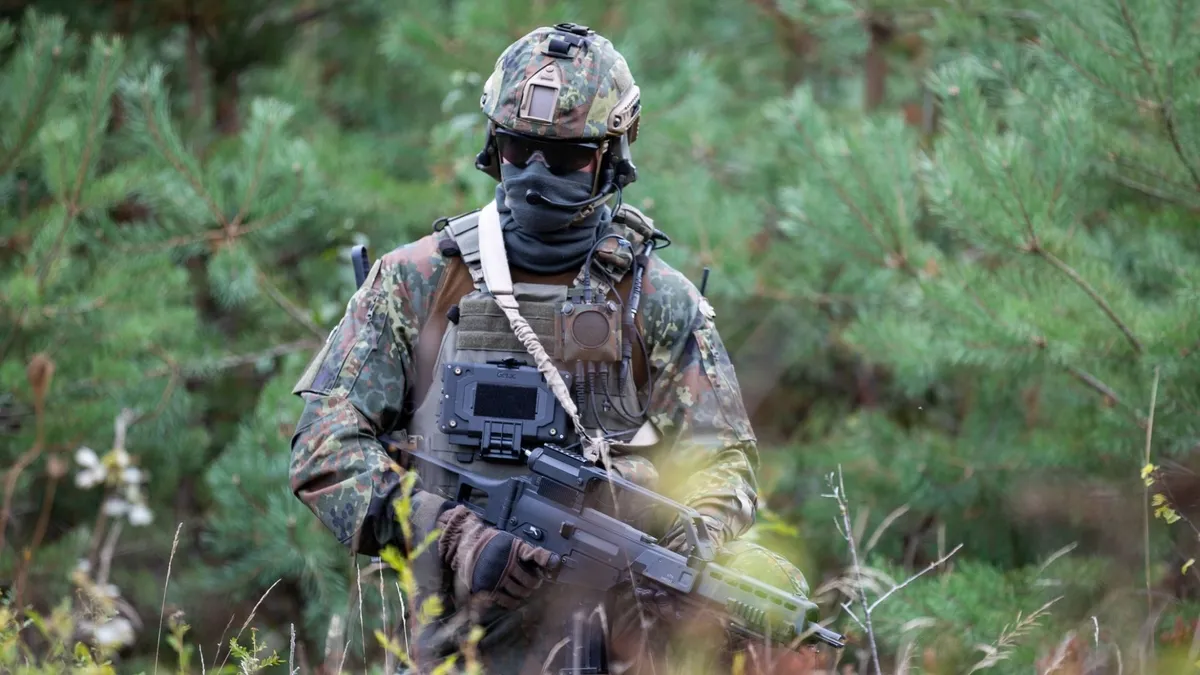
Rheinmetall's lock on German soldier modernization consolidates the company's position as Berlin's preferred prime for land warfare platforms, which cascades into future vehicle and artillery contracts where allied standardization is already fractured.
Germany's willingness to commit full-budget spending on ground force refresh while publicly distancing from US Iran policy suggests Berlin is hedging toward independent European deterrence posture — a procurement signal that precedes diplomatic realignment.
This is a baseline equipment refresh, not a strategic inflection.
Rheinmetall locks in a domestic monopoly on German soldier kit — body armor, load carriage, thermal/optics integration — which means no allied vendor competition and no export leverage for other NATO members seeking interoperability.
The real signal is that Germany is spending hard on ground force modernization while simultaneously signaling allied friction on Iran policy (Merz's April 27 warning about US exit strategy). Bundestag approval of the full budget line suggests Berlin is committed to ground readiness despite the diplomatic chill.
Does this contract include NATO-standard interfaces for ammunition, comms, and sensor feeds, or is it a purely national system? If the latter, it fragments allied logistics during a three-front posture (Ukraine, Iran escalation, China contingency).
Fault Lines
Strategic intelligence, synthesized daily — with a public track record. Every call graded against what actually happened.