Ukrainian Cyber Intel Cripples 37th Russian Brigade Fuel Supply via Chonhar Bridge Strike
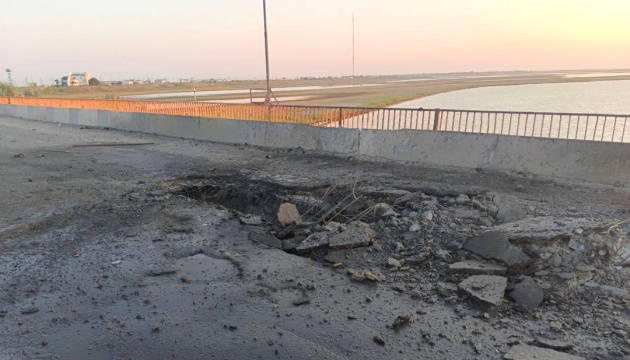
The Chonhar Bridge is a single point of failure for Russian logistics in southern Ukraine. If Ukraine can hold the strike damage long enough to force Russia into extended repair cycles, every day of disruption compounds: fuel-starved units cannot maneuver, air defense systems lose power generation, and artillery loses ammunition resupply.
This creates a window for Ukrainian counter-offensives in sectors where Russian brigades are immobilized. The second-order effect: if Ukraine's cyber access is as deep as this signal suggests, Russia must now assume every logistics node — fuel depots, ammunition storage, command posts — is targetable. That forces a costly dispersal of rear-area assets and slows Russian operational planning.
This confirms Ukraine has sustained cyber penetration of Russian military command systems deep enough to track unit-level logistics in real time — and is weaponizing that intelligence to degrade combat effectiveness at the tactical level.
The 37th Brigade immobilization is not a one-off: if Ukraine can identify and strike fuel convoys across the Chonhar chokepoint, every Russian unit east of the Strait depends on a single, now-compromised supply line.
Watch whether Russia attempts to reroute through the Kerch Strait crossing or accepts the operational cost of a longer southern supply corridor — either choice reduces combat tempo or exposes new vulnerabilities.
How many Russian brigades are currently dependent on Chonhar logistics, and what is the estimated fuel backlog from the bridge strike? If Russia cannot restore the crossing within 72 hours, does this force a tactical retreat from forward positions in eastern Ukraine?
Fault Lines
Strategic intelligence, synthesized daily — with a public track record. Every call graded against what actually happened.