Australia Commits $3.9B to South Australian Submarine Yard, Locks in Domestic Production
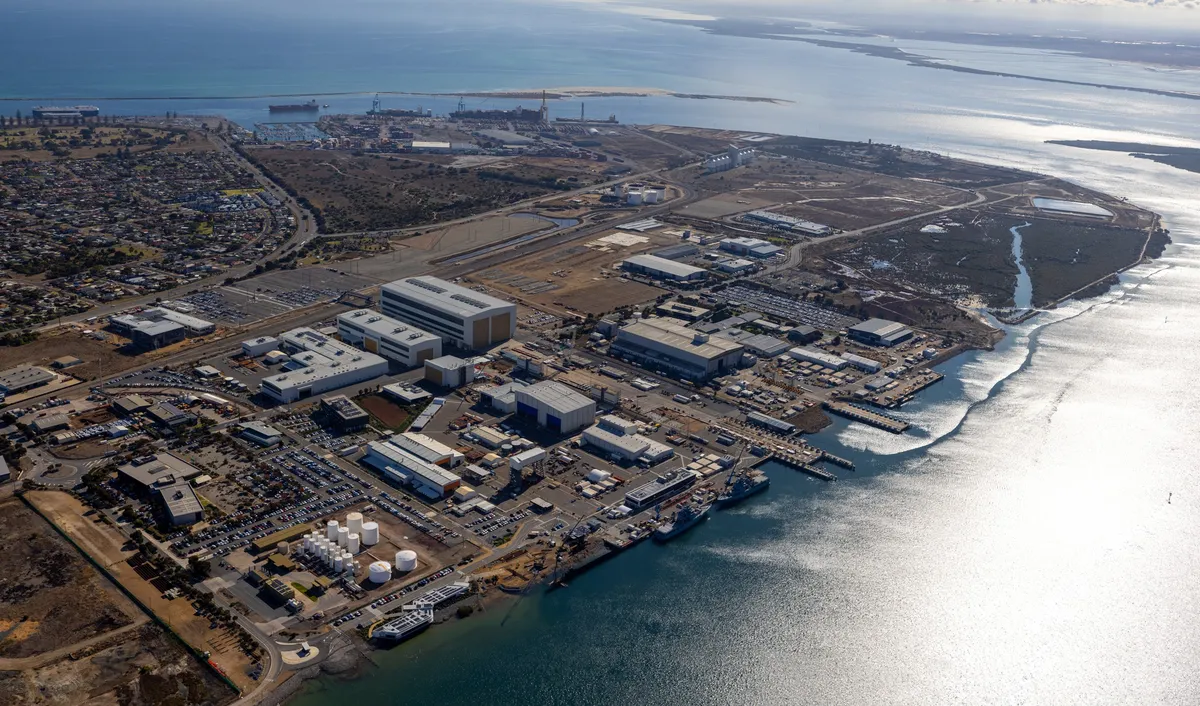
Domestic submarine production capacity is a constraint on Australia's Indo-Pacific deterrence posture — this capital commitment removes the option for offshore manufacturing and locks Australia into domestic supply chains for critical hull and propulsion components, which in turn depends on domestic skilled labor, specialized steel sourcing, and test facilities.
This reduces Australia's flexibility to surge production or absorb allied overflow demand (e.g., from Japan or South Korea) but increases operational security and reduces espionage risk on platform design.
This is a capital commitment to domestic production capacity, not a procurement contract.
The $3.9B down payment signals Australia's intent to maintain organic submarine manufacturing capability rather than outsource or rely on foreign yards. For defense primes (ASC, BAE Systems Australia operations), this guarantees long-term work; for competitors seeking Australian naval contracts, it eliminates a potential opening.
The key variable is whether this $3.9B covers the full cost of facility modernization or represents an initial tranche — the article does not specify, leaving total program cost and timeline unclear. If additional tranches are required, this could constrain other Australian defense procurement.
The article does not break down the $3.9B allocation (facility upgrades, tooling, workforce training, operational reserves) or confirm whether this is the total capital requirement or an initial payment. No timeline for completion or production ramp is provided.
Fault Lines
Strategic intelligence, synthesized daily — with a public track record. Every call graded against what actually happened.