Air Force Awards $18.5M to Aevex for Group 3 Loitering Munitions Production
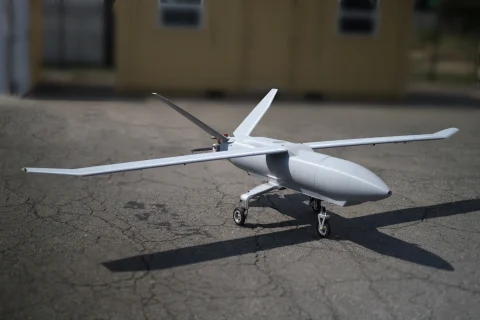
If Aevex's contract is indeed sub-$200K per unit, the Air Force is pursuing a high-volume, low-cost munitions strategy that mirrors the Pentagon's concurrent 10,000-unit low-cost cruise missile framework (Anduril, CoAspire, Leidos, Zone 5 — awarded May 13). This suggests the Air Force is hedging against sustained high attrition in contested airspace by accepting disposable platforms.
The risk: if Group 3 loitering drones become normalized, adversary air defenses will be tuned to them, which could devalue the entire category within 18-24 months — forcing a shift to Group 4 or hybrid designs that cost 5-10x more.
The Air Force is moving one-way attack drones from evaluation into production procurement, which signals acceptance of attrition-based loitering munition tactics as a core capability rather than a niche tool.
Aevex's $18.5M award is small relative to traditional air platforms, but the lack of disclosed unit counts suggests either small initial quantities (under 100 units) or deliberate obscurity around production scale — both indicators the program is still in early scaling.
Watch whether subsequent tranches move to larger primes (RTX, Northrop, L3Harris) or remain fragmented across startups, which determines whether this becomes an integrated air tasking problem or stays a distributed munitions play.
How many units does the $18.5M contract actually cover, and what is the cost per unit? The article's refusal to disclose this is either ITAR-driven or reflects a unit price so low (under $100K) that it reveals production scale constraints.
Fault Lines
Strategic intelligence, synthesized daily — with a public track record. Every call graded against what actually happened.