Gulf State Economic Model Fractures as US-Iran War Disrupts Oil Markets and Ceasefire Collapses
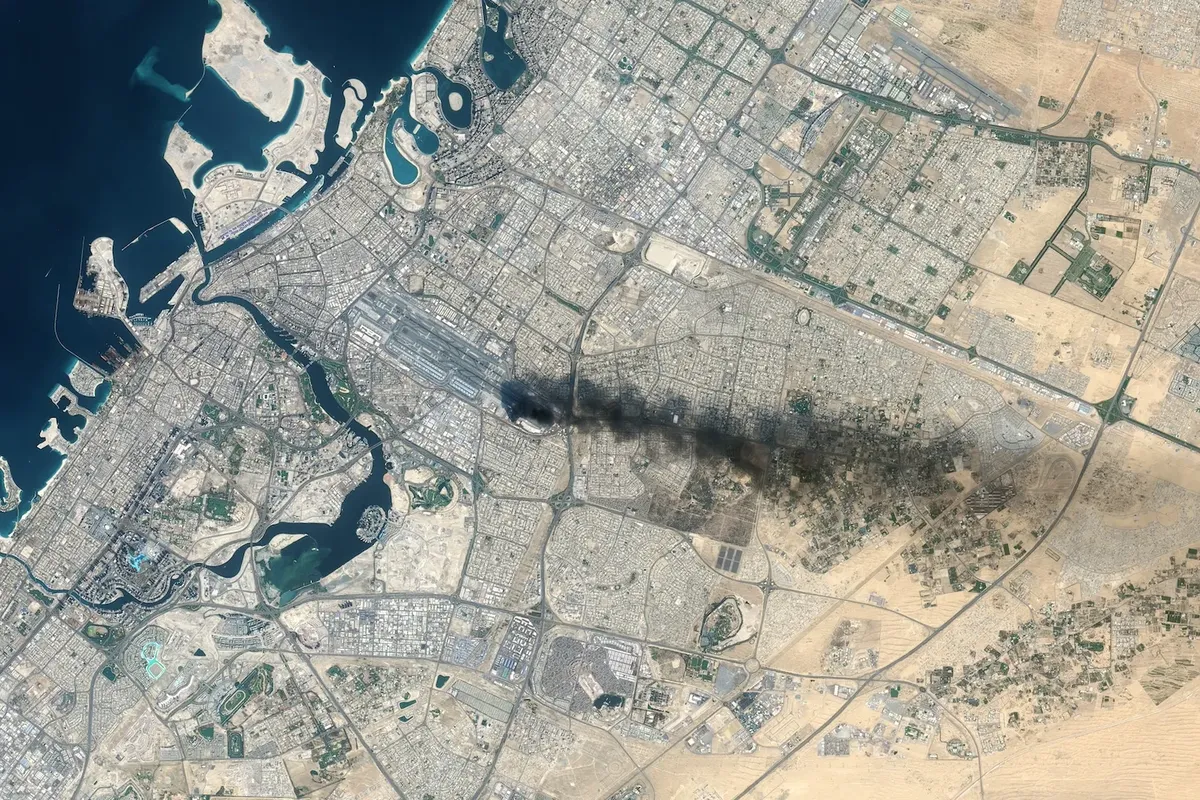
The collapse of Gulf state economic stability forces a choice between US security dependence and Iranian accommodation — a choice that directly determines defense procurement timelines and regional arms sales.
If Saudi Arabia or UAE shift toward Iranian de-escalation to restore oil export stability, US defense contractors (Lockheed, Raytheon, Boeing) lose near-term sales on air defense and strike platforms, while Russian and Chinese systems become viable alternatives.
Conversely, if Gulf states double down on US alignment to deter Iranian blockade, defense spending accelerates but becomes contingent on ceasefire holding — a fragile variable given Iranian militia strikes on US facilities are ongoing despite the nominal ceasefire.
Gulf states face a compounding crisis: energy revenue collapse from Iranian strikes and blockade threats, combined with the ceasefire's fragility (already fractured 36 hours in per April 10 reporting).
Saudi Arabia and UAE cannot rely on either stable oil markets or credible US military presence — the F-15E rescue inside Iran on April 8 was the first acknowledged US ground operation in Iran since 1980, signaling deeper US commitment but also raising questions about escalation control.
If the ceasefire collapses entirely, Gulf states must choose between accommodating Iranian demands (which Tehran has explicitly linked to sanctions relief and Lebanon concessions per April 11 reporting) or accepting prolonged energy disruption. This forces immediate recalculation of defense spending, regional alignment, and investment flows away from oil-dependent economies.
The article does not specify which Gulf states the analysis covers (Saudi Arabia, UAE, Qatar, Kuwait, Bahrain, Oman each have different exposure and strategic relationships), nor does it quantify the economic impact threshold at which Gulf states would shift alignment or defense posture.
Fault Lines
Strategic intelligence, synthesized daily — with a public track record. Every call graded against what actually happened.