Space Force Completes GPS III Constellation; GPS IV Procurement Enters Prototype Phase
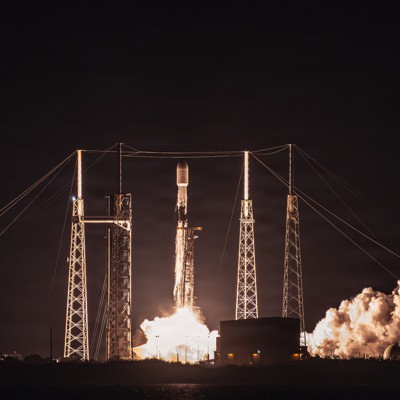
GPS IV procurement will compete for Space Force RDT&E dollars against hypersonic glide-body tracking, orbital refueling testbeds, and AI-driven satellite tasking — all active programs fighting for the same fiscal envelope. If GPS IV enters LRIP before 2028, it consumes roughly $800M-1.2B from the FY27-FY29 FYDP, directly delaying other space superiority initiatives.
Conversely, if GPS IV slips past 2029, the military loses a decade of anti-jam and anti-spoof capability upgrades during a period when China is fielding counter-space ASATs and Russia is demonstrating GPS-denial tactics in Ukraine.
GPS III completion removes a 15-year modernization overhang and frees up Space Force launch manifests for higher-priority payloads — primarily classified military communications and early-warning satellites.
The constellation refresh matters less for civilian GPS than for military precision guidance and timing synchronization, which remain contested in denied environments where adversaries jam or spoof the signal. GPS IV procurement will drive competition among Lockheed, Northrop, and potentially new entrants; the winner locks in a 20-year sustainment contract worth $3-5B.
Timing matters: China's Beidou system achieved full constellation coverage in 2020, and Russia's GLONASS remains operational. A multi-year gap between GPS III handoff and GPS IV IOC would leave the U.S. dependent on legacy satellites for critical military operations — a vulnerability the Pentagon has flagged in classified space strategy documents.
What is the actual GPS IV development timeline, and does it assume evolutionary upgrades (anti-jam, encrypted signals) or revolutionary ones (quantum-resistant timing, mesh-network redundancy)?
Fault Lines
Strategic intelligence, synthesized daily — with a public track record. Every call graded against what actually happened.