Air Force Requests $1.4B for Air Base Defense Systems Amid Hormuz Blockade
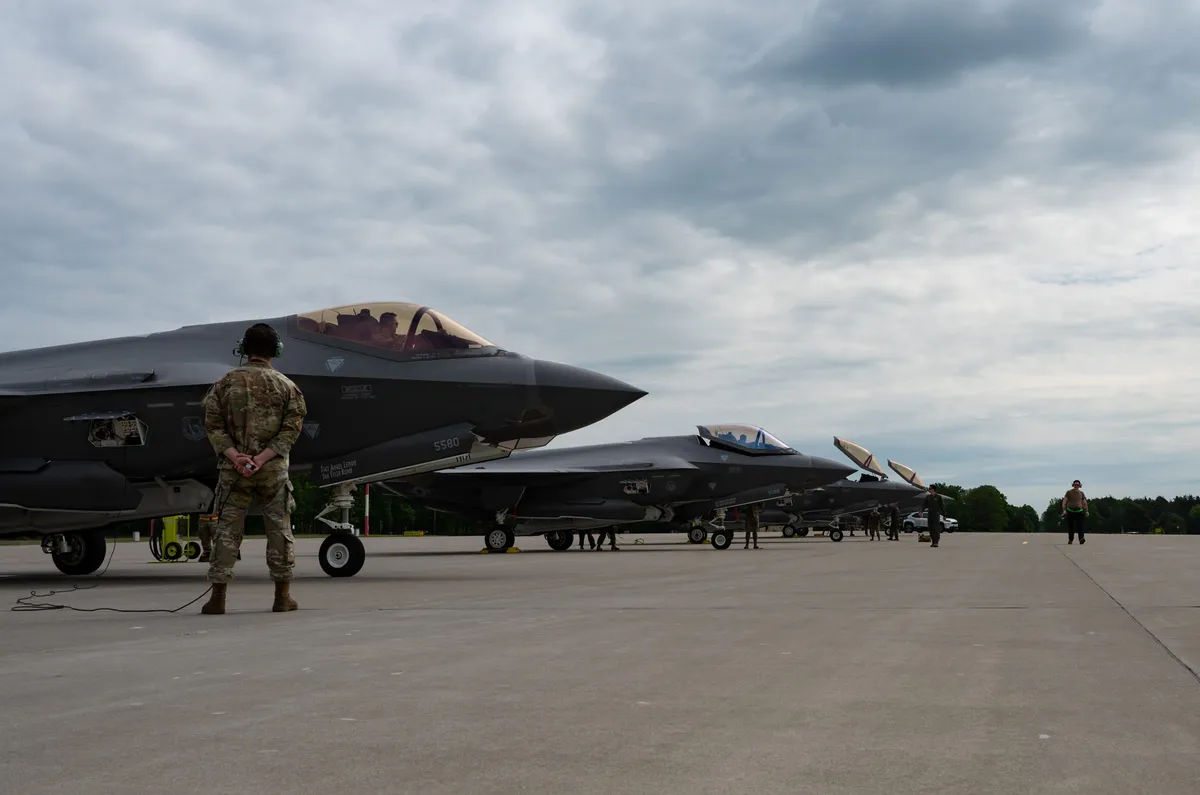
Air base hardening directly constrains force projection in the Middle East and Indo-Pacific. If forward airfields lack integrated air defense, the Navy's carrier strike groups lose their primary divert-and-sustain option during high-intensity operations—forcing longer cycle times on sorties and reducing effective presence.
The $1.4B request, if funded quickly, accelerates the timeline for deploying counter-drone and point-defense systems to bases like Al Dhafra and Kadena, which in turn affects both the Hormuz enforcement tempo (more persistent air cover from hardened bases) and Taiwan contingency planning (Pacific bases gain resilience against PLA missile saturation attacks).
This ties the current Hormuz blockade directly to Indo-Pacific readiness posture.
This is a direct response to the Hormuz crisis already underway.
The timing—announced within hours of Iran's full Hormuz closure and the USS Spruance's first direct naval fire on Iranian shipping—signals the building is moving from reactive enforcement to structural air defense hardening. The $1.4B figure is modest relative to the total budget bump, but it indicates the Air Force has identified forward airfield vulnerability as a near-term constraint.
If this money hits procurement within 12 months, you're looking at accelerated fielding of counter-drone systems (Skyborg, Avenger, or Patriot variants) at bases in the Gulf and Pacific. That compresses the vendor selection window and favors incumbents with existing integration contracts—primarily Raytheon and Northrop. The real tell: whether this $1.4B is new money or cannibalized from fighter modernization.
If it's new, the building is hedging against a longer Hormuz standoff. If it's reprogrammed, the Air Force is signaling it expects this crisis to outlast the current FYDP.
Is the $1.4B allocated to specific threat categories (counter-UAS vs. cruise missile defense), or is it a placeholder pending threat assessment? The article doesn't break down the allocation, which matters for contract timing.
Fault Lines
Strategic intelligence, synthesized daily — with a public track record. Every call graded against what actually happened.