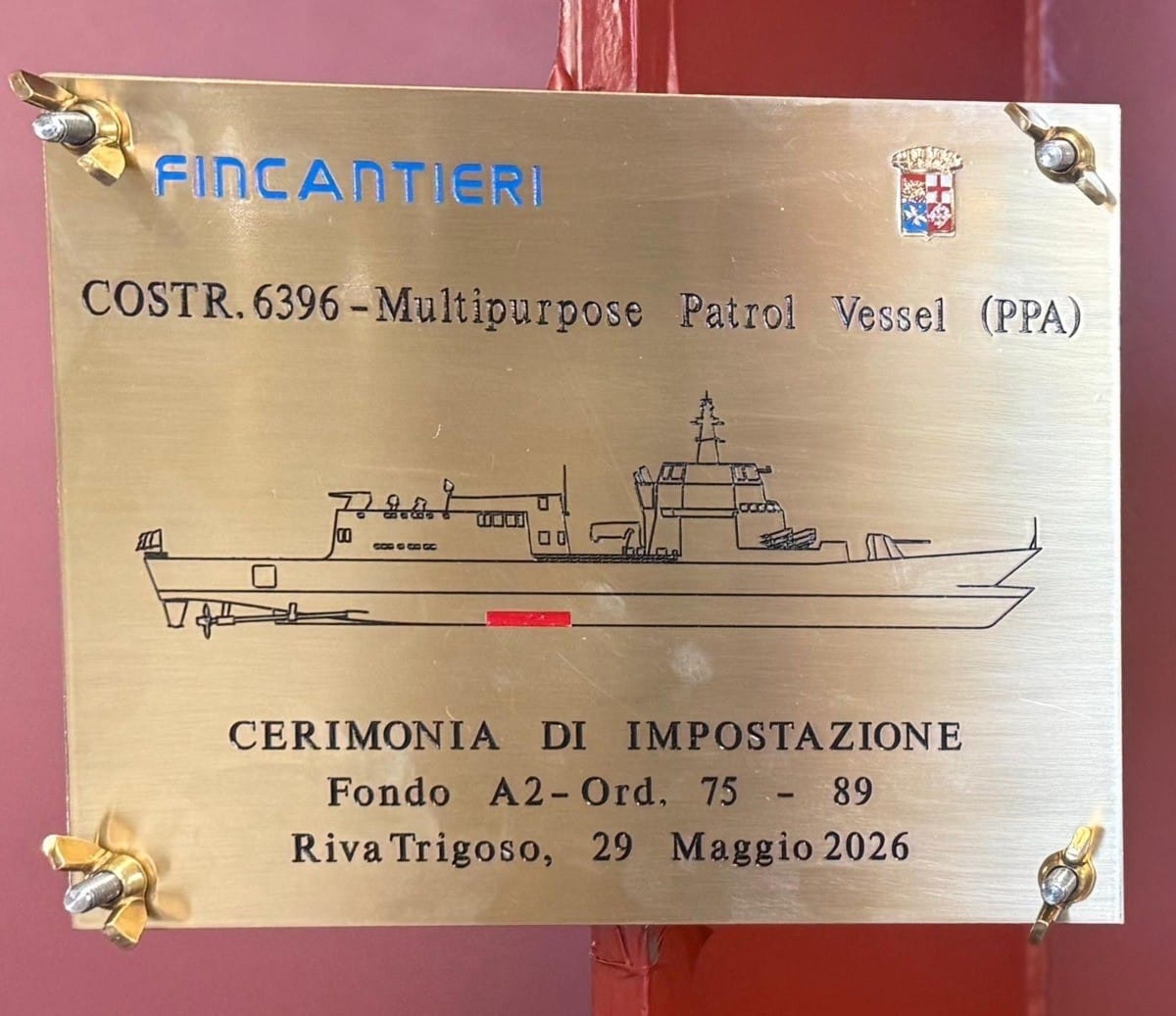
Fincantieri Lays Keel of Italy's 8th PPA Patrol Vessel at Genoa Yard
The PPA program sits at the intersection of two allied constraints: Italian defense spending and European shipyard capacity. If Fincantieri sustains the two-per-year tempo through 2028, Italy delivers eight hulls by mid-decade — enough to backfill aging Maestrale-class ships and meet NATO Rapid Reaction Force rotations.
But the PPA is a smaller, less-capable platform than the FREMM-class frigate; navies are buying both, not either-or. If Italian budget pressure forces a stretch-out, allied navies lose flexibility in the patrol-vessel tier, forcing them to over-task frigates in lower-intensity roles — a cost that surfaces in maintenance and crew retention.
Italy is sustaining serial production of a modern corvette-class platform at a time when European naval yards face capacity constraints and allied navies are accelerating frigate and patrol vessel procurement.
The 8th keel-laying confirms Fincantieri's PPA line is on schedule — a critical baseline for assessing whether Italian and European shipyards can meet the production tempo being demanded by NATO navies rotating through Mediterranean and Red Sea commitments.
Watch whether the FY27 Italian defense budget sustains the current two-per-year cadence or whether budget pressure forces a stretch-out that ripples through allied procurement timelines.
What is the current delivery rate for completed PPA hulls, and does Fincantieri have sufficient supply chain capacity to maintain the two-per-year production rate without competing for the same skilled labor and materials that Navantia and Damen are drawing from for their own frigate programs?
Fault Lines
Strategic intelligence, synthesized daily — with a public track record. Every call graded against what actually happened.