ULA Vulcan Grounding Shifts Military Satellite Launch Cadence to SpaceX as Iran Blockade Tightens
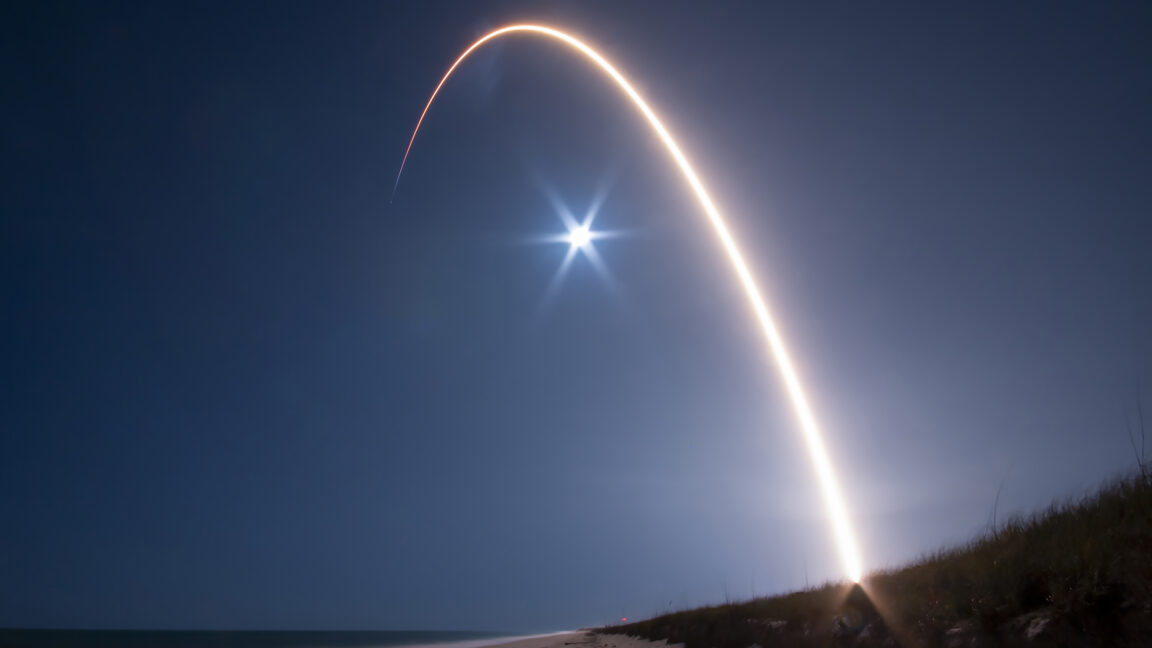
The Vulcan grounding forces U.S. military ISR and communications satellite launches onto SpaceX's manifest during the Iran conflict, when real-time overhead collection and allied coordination depend on launch availability. Delays in Vulcan return-to-flight compress the launch window for any new-start ISR missions needed to track Iranian naval or air assets in the Hormuz blockade scenario.
If SpaceX's manifest is already committed to civilian or other defense payloads, military satellite launches slip — reducing overhead collection capacity precisely when the U.S. is conducting sustained strikes on Iranian energy infrastructure and air defense networks that require continuous ISR validation.
The Vulcan grounding directly reduces U.S. launch capacity during an active conflict in which Iran has blockaded global energy chokepoints and targeted allied infrastructure.
SpaceX's absorption of these missions consolidates dependence on a single commercial provider for time-critical national security launches. If Vulcan remains grounded beyond Q2 2026, the U.S. military loses redundancy in heavy-lift satellite deployment at the moment when real-time ISR and communications satellites are operationally essential to sustain campaign tempo against Iran.
This is a procurement and readiness issue, not a market share story — the constraint is launch cadence, not price.
The article does not specify which military satellite programs are being redirected, their launch windows, or the delay timeline for Vulcan return to flight.
Fault Lines
Strategic intelligence, synthesized daily — with a public track record. Every call graded against what actually happened.