Air Force 'Ringleader' Exercise Tests Sensor Fusion Stack After Years of Development
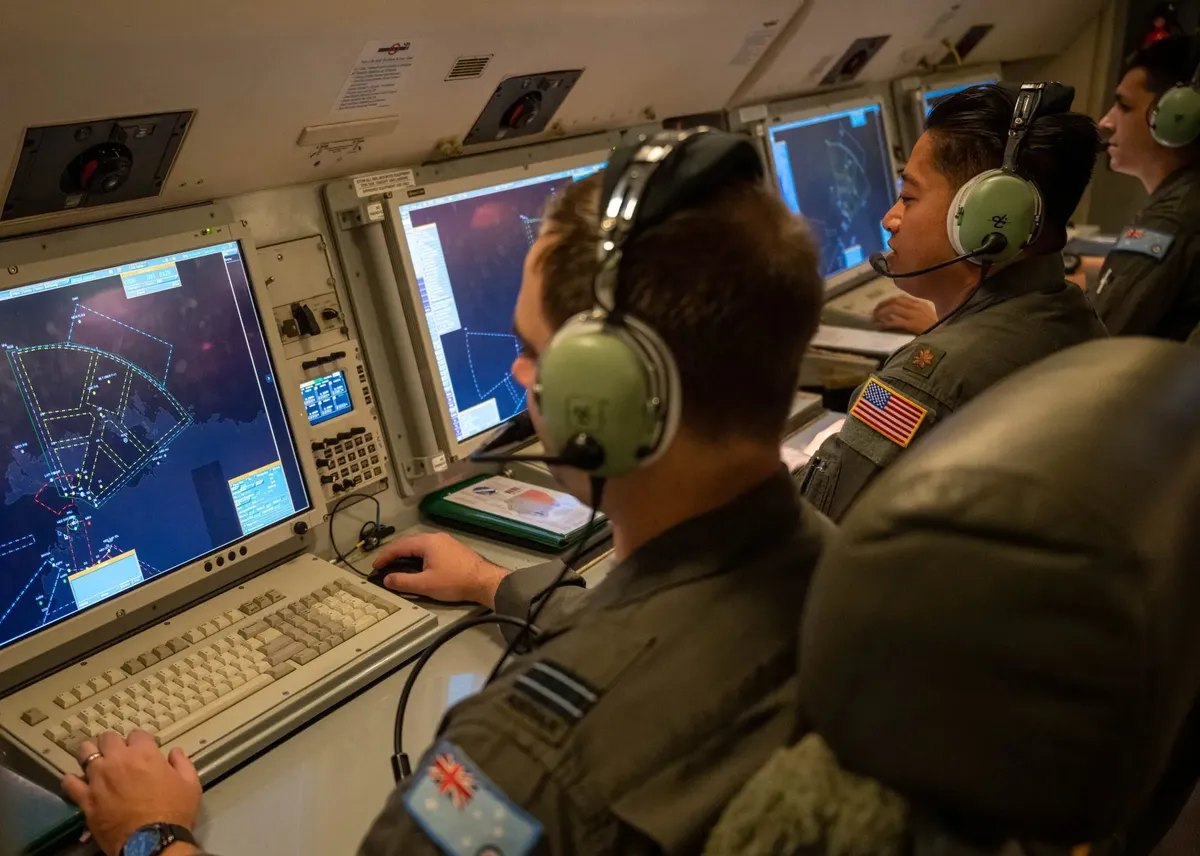
Successful sensor fusion validation accelerates procurement lock-in for Northrop Grumman (ABMS/Advanced Battle Management System lead), Raytheon (sensor hardware integration), and Boeing (KC-46 integration pathway), while delays would extend competition windows and create cost-plus exposure for prime contractors.
If the exercise confirms fusion works at scale, it also justifies higher-cost, higher-integration variants of existing platforms (Block IV F-35, F-22 retrofit) over lower-cost alternatives, reshaping the fighter sustainment budget for the next five years.
This exercise represents the transition from development to operational validation of a core enabler for multi-domain command and control.
If the Air Force successfully demonstrates sensor fusion across air, space, cyber, and electronic warfare domains in a contested environment, it validates a technical approach that will inform FY27-28 procurement decisions for integration across fighter platforms (F-35, F-22), tankers (KC-46), and airborne ISR (E-7, RC-135).
Failure or significant gaps would likely delay fielding timelines and create openings for alternative architectures (e.g., navy-led distributed fusion concepts). The exercise outcome also signals readiness for Pacific Command integration, which depends on reliable cross-service data sharing under latency and jamming constraints.
The article does not specify which platforms, units, or geographic theater will participate; whether adversarial AI/electronic warfare will be simulated; or what success metrics the Air Force has established for the exercise.
Fault Lines
Strategic intelligence, synthesized daily — with a public track record. Every call graded against what actually happened.