NATO Transformation Chief Visits Kyiv; Alliance Expands Ukraine Training Role Beyond Exercise Model
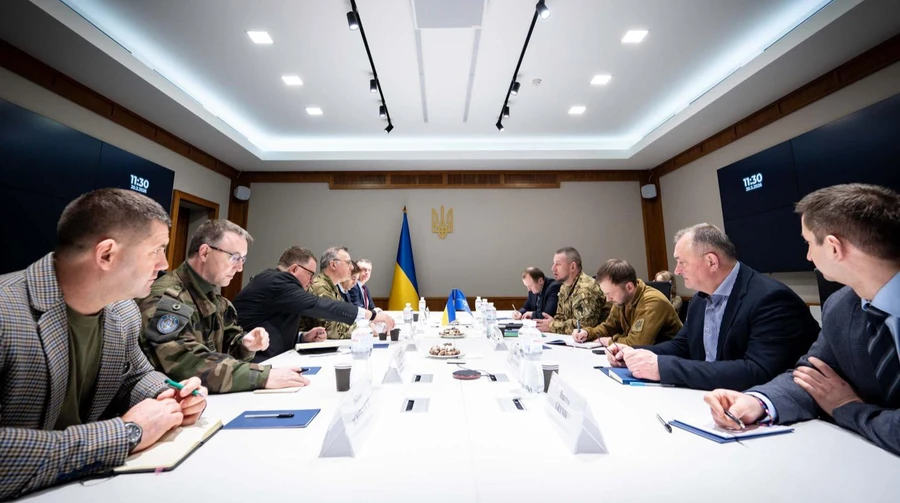
NATO's expansion of in-theater training during active conflict compresses the cycle between doctrine transfer and combat deployment, which directly affects force regeneration capacity in Ukraine and indirectly raises the threshold for NATO-Russia direct confrontation.
If NATO trainers operate within striking distance of Russian forces (as they would in active war zones), Russian targeting of NATO personnel becomes a trigger for Article 5 invocation — converting a training mission into a deterrence variable.
This also ties to the open-ended US commitment (Hegseth's March 19 statement of no exit criteria): expanded NATO training presence in Ukraine locks allied force generation into a multi-year commitment regardless of battlefield outcomes.
This signals NATO is moving from advisory/training-at-distance to in-theater capability-building during active conflict.
If NATO embeds permanent training cadres or accelerates doctrine transfer to Ukrainian forces, it narrows the operational gap between Ukrainian and NATO standard tactics — directly affecting force readiness timelines.
The visit occurs as US commitment to the theater is explicitly open-ended (Defense Secretary Hegseth, March 19) and amid active Iranian strikes on US-allied territory (Kuwait, Diego Garcia, March 20-21). Expansion of NATO's direct training footprint in an active war zone also tests Article 5 boundaries: a NATO trainer casualty creates immediate alliance response obligations.
Watch whether this translates to explicit force-generation targets (e.g., equip X brigades to NATO standard by Y date) or remains advisory.
The article does not specify what 'expanding that role' means operationally — whether NATO is deploying permanent training teams to forward positions, accelerating certification timelines, or shifting from exercise-based to live-fire doctrine transfer.
Fault Lines
Strategic intelligence, synthesized daily — with a public track record. Every call graded against what actually happened.