Hegseth Orders Review of US Force Posture in Europe; Threatens Budget Cuts to NATO Operating Funds
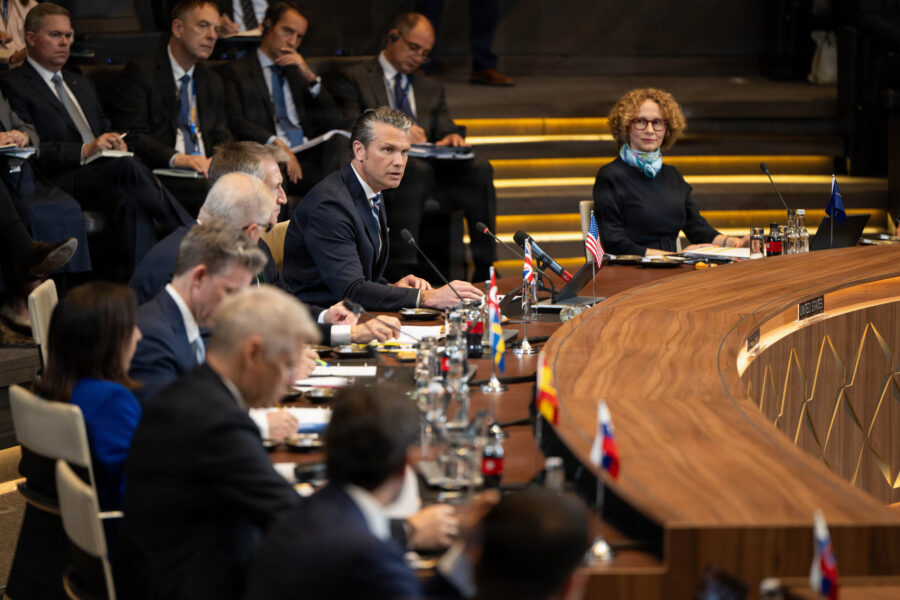
The timing pins this to Trump's broader Iran deal windfall: with Middle East tensions de-escalating and US diplomatic capital freed up, the administration is now moving against what it views as allied free-riding in Europe. If the review concludes that US force levels in Europe exceed what allies will fund, Hegseth can argue for a drawdown — reducing US exposure and forcing European rearmament.
This accelerates the industrial cycle: Poland, Baltics, and UK will front-load procurement to lock in current US commitment levels before any cuts materialize. The FY27 NDAA becomes the pressure point — if Congress blocks the cut, Hegseth loses leverage; if Congress permits it, European allies face a 2027-2028 budget crisis.
Hegseth is operationalizing Trump's transactional NATO stance into a specific leverage mechanism: decoupling US funding from allied compliance, which forces European defense ministries to choose between higher national defense budgets and reduced NATO institutional capacity.
The threat targets NATO's €3.2B annual operating budget — money that funds command infrastructure, joint training, and logistics coordination. If the US cuts its contribution (currently ~20% of NATO's operating budget), European members must either backfill the gap or accept degraded alliance capability.
The review itself, led by EUCOM, becomes the instrument for identifying which allied postures are deemed insufficient — creating a decision point by late 2026 when findings are expected. This is distinct from prior US pressure on the 2% GDP target: it weaponizes institutional funding rather than national budgets.
What specific percentage cut is Hegseth considering, and does it apply only to NATO's operating budget or also to US bilateral military aid and forward-deployed force sustainment? The distinction determines whether this is a negotiating posture or an actual budget reduction.
Fault Lines
Strategic intelligence, synthesized daily — with a public track record. Every call graded against what actually happened.