Australia Commits $53B AUD Defense Boost to 3% GDP; Reaffirms US Alliance Amid Hormuz Crisis
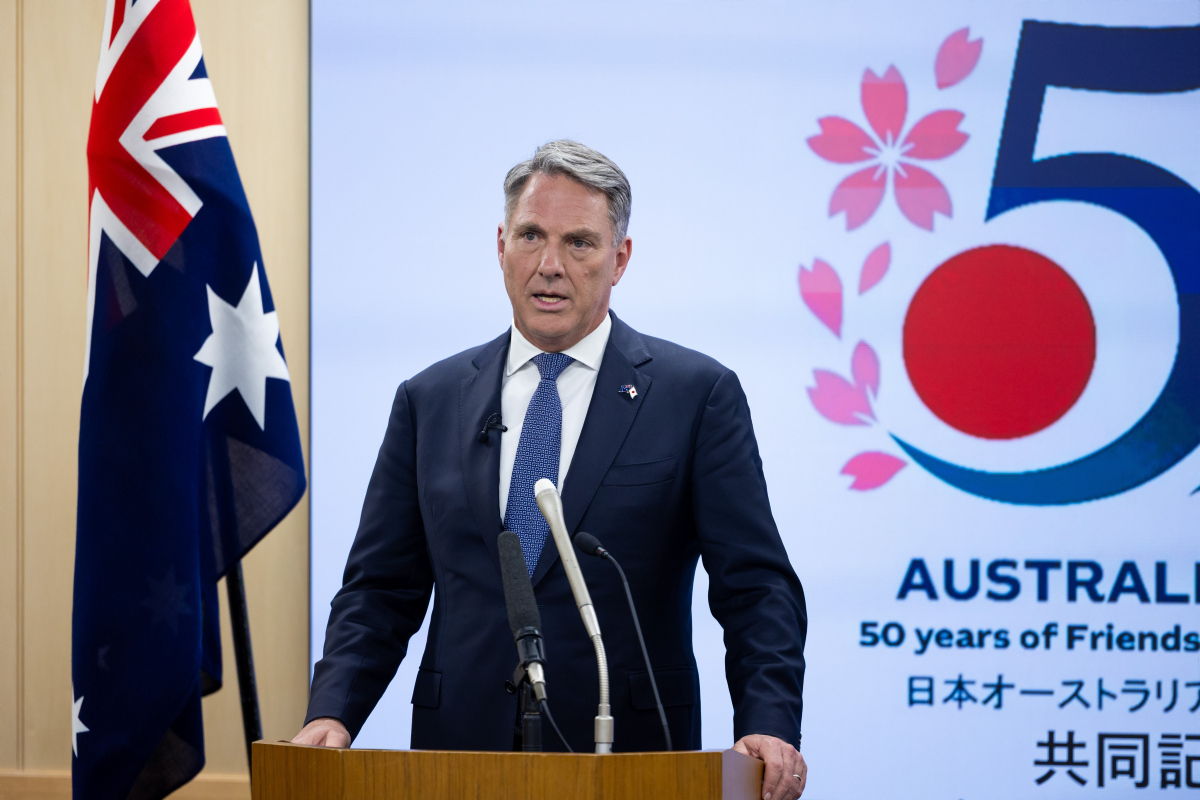
Australia's reaffirmation of the US alliance and 3% GDP commitment directly sustains the logistics network Trump formalized with Indonesia on April 13 — Canberra's naval expansion in the Indo-Pacific provides the distributed basing and overflight support that makes sustained Hormuz blockade enforcement operationally feasible beyond the 72-hour window already exposed by two supertanker breaches.
Conversely, Germany's April 15 pivot toward independent European defense suggests allied unity is fracturing by region: Indo-Pacific allies (Australia, Indonesia) are doubling down on US interdependence, while Europe is decoupling. This geographic split will shape how sustainably the blockade holds and whether allied procurement can fill the E-3 AWACS gap the Air Force identified on April 16.
Australia's 3% GDP commitment signals allied confidence in sustained US power projection despite concurrent signals of European independence-building (Germany's defense coalition on April 15) and blockade enforcement gaps (second supertanker breach on April 16).
The timing and explicit US reaffirmation suggest Canberra views the Hormuz crisis as a test of alliance cohesion rather than a reason to hedge. The AUD $53B injection will flow primarily to Indo-Pacific naval and air capabilities (specifics not detailed in this article), which directly supports US logistics access formalized with Indonesia on April 13.
However, the signal's strength depends on whether Australia's spending accelerates procurement timelines or merely front-loads existing programs — the article provides no breakdown of how the $53B is allocated across platforms or years.
The article does not specify whether the $53B represents new funding or a reallocation of existing defense budgets, nor does it detail the timeline for deployment or the specific platforms (submarines, frigates, air defense) that will absorb the increase.
Fault Lines
Strategic intelligence, synthesized daily — with a public track record. Every call graded against what actually happened.