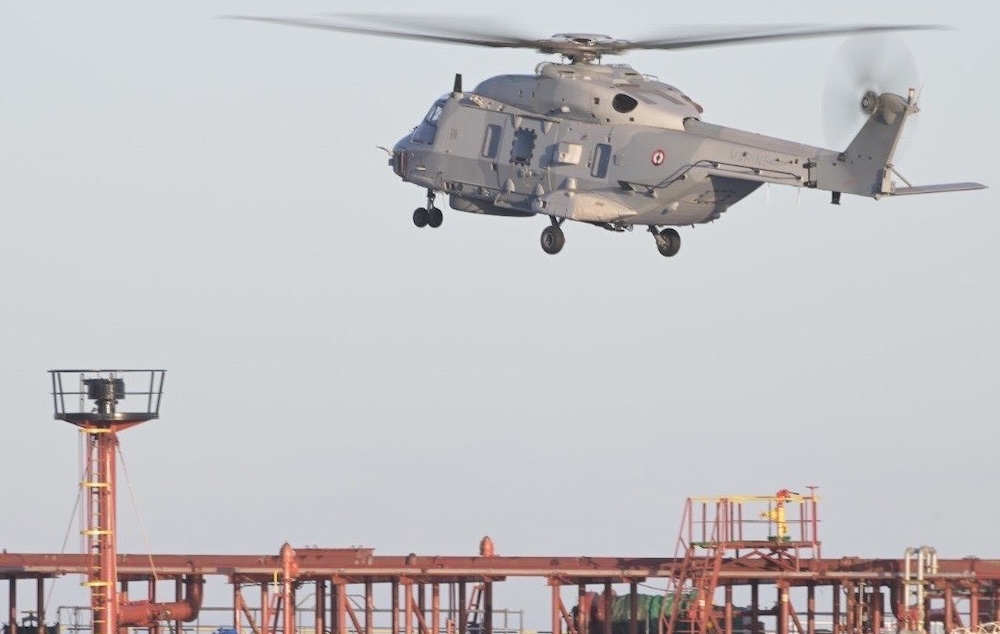
France Boards Russian Shadow Fleet Tanker Near Sicily; Escalates EU Enforcement of Oil Sanctions
If France sustains this tempo, shadow fleet routing shifts from Mediterranean to Arctic and Indian Ocean passages — adding 15-25 days to transit times and forcing Russian energy buyers to accept higher insurance premiums or accept delivery delays.
This makes Oman's parallel Hormuz corridors (announced June 24) a de facto alternative to both EU-patrolled waters AND Iran's toll scheme, positioning Oman as the preferred routing hub for Russian oil. The second-order effect: energy traders holding Russian contracts now face a choice between EU-enforced maritime seizure risk and Oman-transited delivery delays.
Whichever route becomes dominant determines whether Russian oil discounts widen further or whether delivery reliability constraints absorb the discount pressure.
EU secondary sanctions enforcement against Russian energy transit is now a daily operational reality — not a policy announcement.
This matters because France has moved from diplomatic posturing to sustained maritime interdiction, which forces three immediate decisions: (1) for EU member navies, whether to allocate permanent assets to Mediterranean shadow-fleet patrols rather than NATO commitments; (2) for shipping insurers and flag states, whether to price Russian-linked vessels out of European waters entirely; (3) for Moscow, whether to route tankers through Arctic or Indian Ocean corridors at 40% higher transit costs, or accept vessel seizures as a cost of sanctions evasion.
The timing — two days after Iran announced its own Strait of Hormuz toll scheme — suggests coordinated pressure on energy chokepoints. Watch for whether France requests formal EU naval task force authorization (triggering NATO vs. sanctions enforcement resource trade-offs) at the July European Council.
How many Russian shadow fleet transits is France actually intercepting per month — is this one-off enforcement or sustained interdiction? And what percentage of Russian oil is now routed through non-EU waters to avoid Mediterranean patrols?
Fault Lines
Strategic intelligence, synthesized daily — with a public track record. Every call graded against what actually happened.