Air Force Targets 28,000 FAMM Cruise Missiles; Low-Cost Production Begins Fall 2026
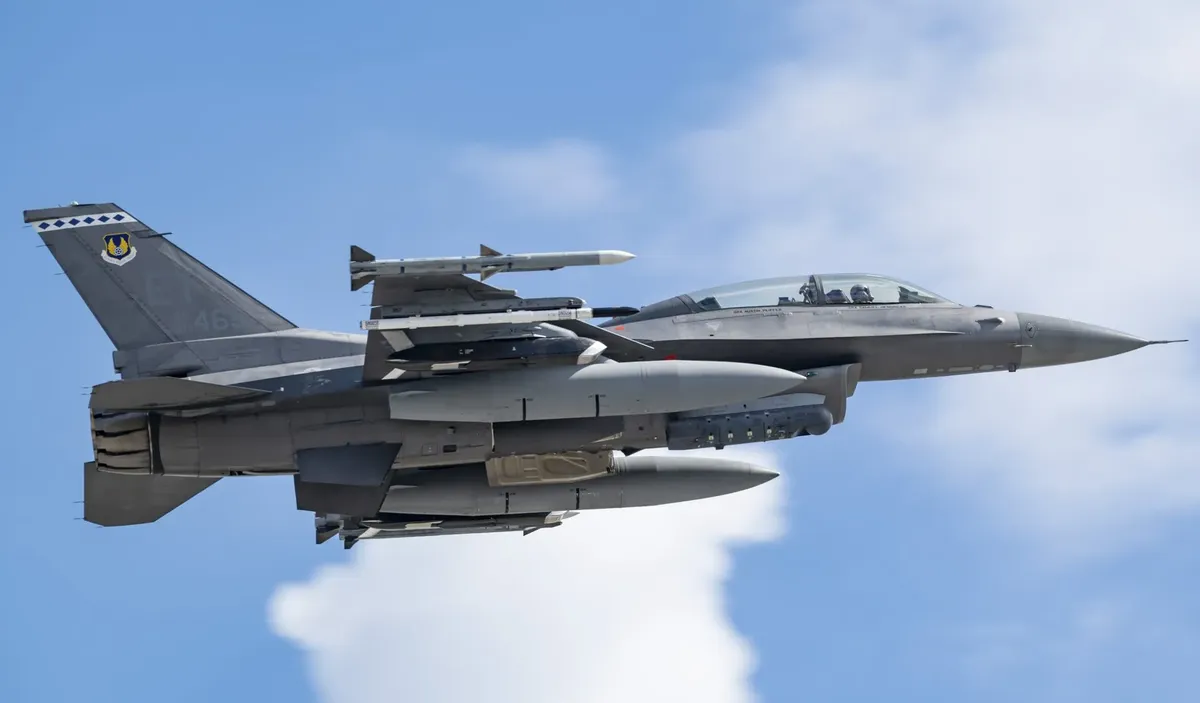
The timing is not accidental. Russia's documented shift to cluster warheads and Ukraine's ability to cripple logistics (Chonhar Bridge strike disrupted the 37th Motor Rifle Brigade's fuel supply) show that attrition rates in modern conflict exceed peacetime procurement models.
If FAMM achieves unit costs in the $500K-$1M range, the Air Force can sustain 2,000+ monthly missile expenditures without exhausting annual munitions budgets — a capability that was impossible with legacy cruise missiles at $2M-$3M per unit. The constraint becomes not affordability but production floor capacity.
The 28,000-unit procurement target signals a deliberate shift toward mass-production of attritable munitions to sustain high-tempo operations against peer competitors.
FAMM production beginning in fall 2026 locks the Air Force into a multi-year industrial cadence at a time when Ukraine's drone strike surge and Russia's Kalibr cluster-warhead adaptation (both documented in the last 72 hours) demonstrate that high-volume, low-unit-cost missiles are now the binding constraint in sustained conflict.
If the Air Force sustains the 28,000-unit trajectory, this absorbs significant production capacity from suppliers like Raytheon and General Dynamics — capacity that might otherwise flow to LRIP contracts for legacy platforms. Watch the FY27 FYDP markup for actual dollar allocation to FAMM production lines.
What is the unit cost per FAMM missile, and how does it compare to Tomahawk or AGM-158 production costs? The 28,000-unit target is meaningless without knowing whether this represents a $5B or $50B commitment.
Fault Lines
Strategic intelligence, synthesized daily — with a public track record. Every call graded against what actually happened.