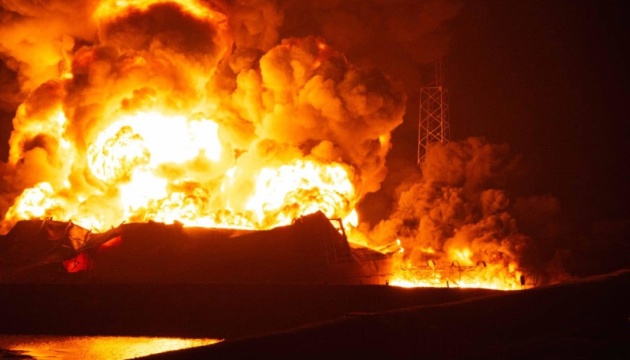
Ukraine Strikes Sevastopol Oil Depot Third Day; Russian Export Capacity Under Sustained Pressure
Ukraine's energy targeting directly reduces Russia's capacity to finance military operations and sustains Western leverage in any negotiated settlement. If Russia cannot export crude at pre-strike volumes, either its war spending contracts or it must liquidate hard-currency reserves faster — both constrain its operational tempo in Ukraine and reduce its ability to sustain long-range strike campaigns.
This also signals to NATO that Ukraine's drone capability now extends to sustained infrastructure targeting, not just one-off strikes, which may factor into allied decisions on long-range ATACMS/Storm Shadow provision.
Ukraine is executing a sustained campaign against Russian energy export infrastructure, not isolated strikes.
Two major facilities hit in 48 hours suggests a coordinated targeting strategy aimed at degrading Russia's hard-currency revenue stream. The Sevastopol depot is a critical node in Russia's Black Sea logistics — a three-day fire indicates either structural damage that will take weeks to repair or Ukrainian persistence in re-striking the same target.
Combined with the Tuapse hit, Russia has lost an estimated 880,000+ barrels per day of export capacity in a single operational cycle. At $80/barrel, that's roughly $70M daily revenue loss. The strategic effect: Russia's ability to fund its Ukraine operations depends on either reopening these terminals fast or shifting crude flows through alternative routes — both expensive and time-consuming.
Gazprombank and Surgutneftegaz will feel margin pressure within weeks.
Is the Sevastopol depot still burning due to structural damage or because Ukraine struck it again on April 19-20? The difference between a single successful strike and a pattern of re-strikes changes the operational tempo and repair timeline.
Fault Lines
Strategic intelligence, synthesized daily — with a public track record. Every call graded against what actually happened.