Iran-Linked Hackers Breach FBI Director Email; Cyber Escalation Enters Intelligence Domain
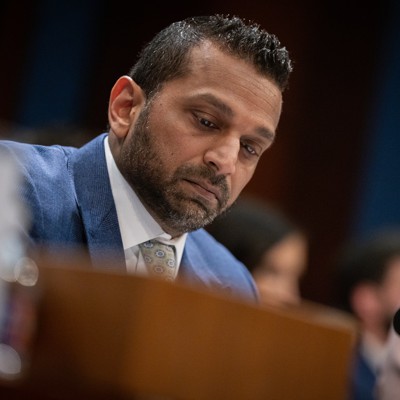
The breach creates an asymmetric intelligence advantage for Iran at a moment when U.S. decision-makers are choosing between a 10-day negotiation window (Trump's April 6 deadline) and potential strikes on Iranian power plants.
If Iran obtained advance warning of U.S. targeting intentions or interagency disagreements on escalation, the credibility of U.S. threats deteriorates and Iran's cost-benefit calculation for further proxy attacks (Houthis, Hezbollah, IRGC-N) shifts in favor of continued operations.
This converts cyber espionage from a counterintelligence problem into a deterrence variable—U.S. credibility in the Middle East now depends on operational security that has demonstrably failed.
This breach exposes a critical vulnerability in U.S. intelligence command during active kinetic operations.
If the compromise is confirmed, adversaries now possess access to real-time intelligence communications, operational planning, and interagency coordination on Iran response options—precisely the information needed to anticipate or counter U.S. strikes.
The timing (March 27, during sustained Israeli strikes on Iranian nuclear sites and after Iranian missile attacks on Prince Sultan Air Base) suggests the breach may have occurred during the conflict itself, not in preparation for it.
For defense contractors supporting intelligence operations (Booz Allen Hamilton, SAIC, Palantir), this signals a potential shift in threat modeling—cyber intrusion into classified networks is no longer a theoretical risk but an active operational problem.
For program managers on intelligence modernization contracts, this likely triggers emergency security audits and may accelerate classified cloud migration timelines to reduce email dependency.
The article does not specify what information the hackers accessed, how long they maintained access, whether they exfiltrated classified material, or what specific communications or intelligence assessments may have been compromised. Without this, the operational damage remains unquantified.
Fault Lines
Strategic intelligence, synthesized daily — with a public track record. Every call graded against what actually happened.