Air Force Accelerates B-21 Testing With Operational Pilot; Signals Compressed Acquisition Timeline
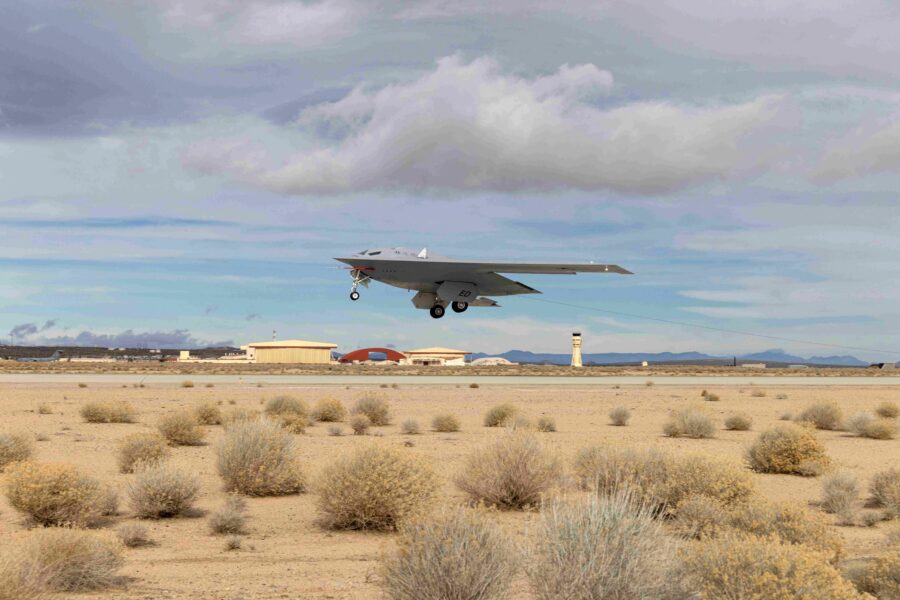
If operational pilots are now embedded in developmental test from first flight, Northrop Grumman's test infrastructure costs flatten—fewer separate test teams, shared facilities, compressed instrumentation phases. The downside: any critical flaw caught in operational testing now halts both tracks simultaneously, rather than being isolated to developmental phase. This trades schedule risk for cost efficiency.
For NGAD, where Lockheed Martin and Northrop are in a competitive fly-off, the contractor that can sustain parallel operational testing without schedule shock gains a credibility edge in the FY27 source selection.
This compresses the B-21's path to Initial Operational Capability by collapsing two normally sequential phases—developmental and operational testing—into parallel tracks.
The mechanism: operational pilots provide real-world handling feedback 12-18 months earlier than traditional test programs, which shortens the delta between prototype validation and fleet readiness. Watch whether this parallel-testing model appears in FY27 procurement guidance for the Next Generation Air Dominance (NGAD) program, where the Air Force faces even tighter IOC pressure from INDOPACOM.
Did the Air Force compress the B-21's original IOC estimate, or is this testing acceleration being absorbed into the existing timeline without accelerating delivery?
Fault Lines
Strategic intelligence, synthesized daily — with a public track record. Every call graded against what actually happened.