Ukraine Air Defense Defeats 190 of 210 Russian Drones; Saturation Attack Pattern Continues
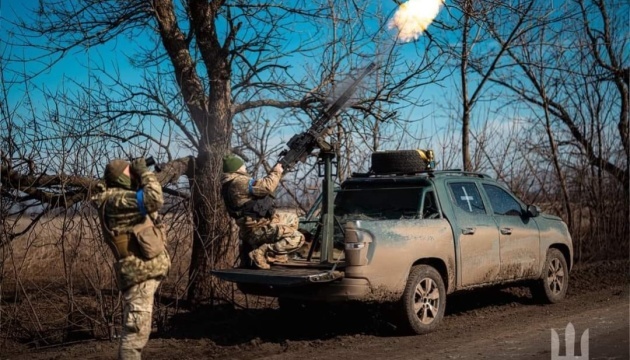
Sustained Russian drone production at 200+ per night, coupled with 90% Ukrainian intercept rates, sets a hard constraint on US air defense industrial capacity. If Ukraine's monthly consumption is now 6,000 drones and the US is supplying Patriot, HAWK, and SHORAD interceptors, the FY27 supplemental request becomes a procurement bottleneck, not a budget line.
Raytheon and Northrop cannot expand production without foundry capacity (semiconductor-limited) and solid rocket motor production (ITAR-constrained), forcing a choice between Ukrainian resupply and NATO air defense modernization.
This is attrition data, not a capability shift.
Ukraine's air defense is holding the line — 190 kills out of 210 sorties is operationally sound. But the baseline matters: Russia is launching 200+ drones per night. That's a production and sustainment problem for Moscow, not a Ukrainian vulnerability. If Russia can maintain this tempo while Ukraine degrades 90% of incoming strikes, the war enters a grinding logistics competition.
Raytheon and Northrop's SHORAD contracts become less about innovation and more about throughput — can the US and allies manufacture enough interceptors to sustain Ukrainian consumption at current burn rates? The Air Force's supplemental funding request (flagged in yesterday's signals) suddenly looks like a floor, not a ceiling.
What's the composition of the 20 drones that got through? Loitering munitions, reconnaissance platforms, or high-value cruise missiles? A 90% intercept rate on cheap Shahed-136s is different from a 90% rate on Kh-101s — the strategic implication flips.
Fault Lines
Strategic intelligence, synthesized daily — with a public track record. Every call graded against what actually happened.