Pentagon Loans $150M to LeoLabs for Radar Expansion; $300M Total With Private Match
The loan structure — public capital contingent on private match — is a template OSC is now standardizing. Stoke Space received identical terms six days earlier. This forces defense-tech vendors to prove market viability before accessing government financing, which filters out ventures that can't attract private capital at scale.
LeoLabs' radar network is already contractually embedded in Space Force operations (Commercial Augmentation Space Reserve, Joint Commercial Operations licensing); the loan accelerates production capacity, not capability development.
Space domain awareness is now a capital-constrained problem the Pentagon is solving through debt, not procurement.
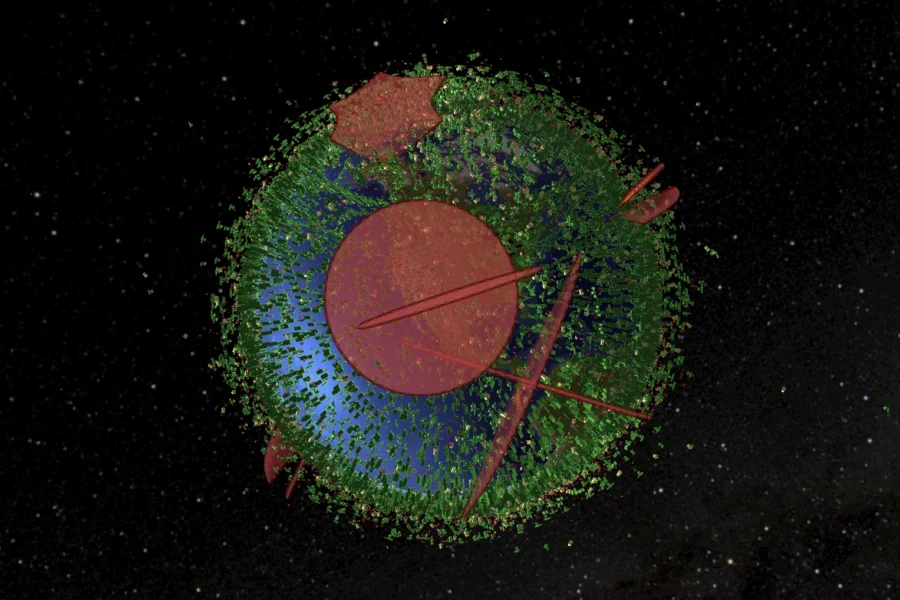
LeoLabs' radar network tracks nearly 29,000 orbital objects; the loan accelerates a domestic-only architecture at a moment when the Space Force is stress-testing commercial augmentation during active Middle East operations and potential Taiwan contingency.
The dollar-for-dollar private match requirement ($150M from LeoLabs' investors) signals OSC is rationing public capital and forcing commercial partners to commit skin-in-the-game before expanding sovereign coverage. Watch whether LeoLabs secures the private tranche by Q2 2027 — if it doesn't, the radar gap widens exactly when contested orbital operations are becoming routine.
Does the $150M loan cover both manufacturing facilities, or is it split between the two sites? The article says the loan 'includes the completion of two large-scale manufacturing facilities by 2028' but doesn't specify the capital allocation between them.
Fault Lines
Strategic intelligence, synthesized daily — with a public track record. Every call graded against what actually happened.